Showing posts with label History. Show all posts

Tuesday, July 28, 2026

I Went Looking for the Ocean… and Found a 200-Year-Old Secret

From Gwaing River Mouth to the forgotten story of Chief Dikkop and Pacaltsdorp.

There are days when you set out with no real agenda, just a quiet plan to find a stretch of coastline where you can hear the ocean properly. Just a short drive from George, tucked away beyond Pacaltsdorp, lies one of the Garden Route’s lesser-known treasures, the beautiful Gwaing River Mouth. While nearby beaches like Herolds Bay often attract the crowds, Gwaing remains a quieter escape, a place where river, ocean and rugged coastline meet in a peaceful natural setting.

But places like this have a habit of revealing more than they promise. What looks like an ordinary coastal stop quickly becomes a gateway into something far older, where the landscape starts telling stories that stretch back more than two centuries. That’s when you begin to realise that you’ve accidentally stepped onto a forgotten discovery route, layered with history that most people drive past without ever noticing.

So after a short ride I find myself where the Gwaing River flows down from the Outeniqua Mountains and eventually empties into the Indian Ocean at a small estuary about 3 km east of Herolds Bay. The estuary itself is relatively small, roughly 1.4 km long, and is classified as a temporarily closed estuary, meaning sandbanks sometimes seal the mouth from the sea depending on tides and river flow.

But what the Gwaing lacks in size, it more than makes up for in atmosphere. Steep cliffs frame the golden sand beach while the river winds gently toward the ocean, creating calm pools and sheltered spots perfect for exploring. Visitors often come here for fishing, long beach walks, picnics or simply to sit and watch the waves roll in.

During winter and spring, visitors sometimes spot whales passing along the coast, while dolphins frequently patrol the waves just offshore. At sunset the cliffs glow warm orange and the river reflects the sky like a mirror, one of those quiet Garden Route moments that stays with you long after you leave.

The nearby community of Pacaltsdorp has a long and fascinating history dating back to the early 1800s, when the mission station of Hoogekraal was established and later renamed after missionary Charles Pacalt. Being a sucker for history I started looking into the history of Pacaltsdorp, which turned into a whole adventure of its own. The story of Pacaltsdorp is really a story of two founders: Charles Pacalt, whose name the town carries, and Chief Dikkop, whose vision brought the mission station into existence. Most visitors know one name, but few know the other. Chief Dikkop is one of the most important, yet often overlooked, figures in the Southern Cape story.

Chief Dikkop (Kaptein Dikkop) was the leader of the local Khoikhoi community living at Hoogekraal, the settlement that later became Pacaltsdorp. Without Dikkop, Pacaltsdorp may never have existed. Chief Dikkop had the foresight to invite a missionary because he saw opportunities for advancement for his community.

In 1812, after meeting missionaries from the London Missionary Society, Dikkop repeatedly requested that a resident missionary be sent to Hoogekraal. His request was eventually granted when Reverend Charles Pacalt was assigned to the settlement in 1813. According to local accounts, Dikkop personally travelled by ox wagon to Suurbraak to fetch Pacalt, a journey that reportedly took four weeks.

After Reverend Pacalt's death in 1818, the Hoogekraal settlement was renamed Pacaltsdorp in his honour. There are several historic sites from that time. Before a church was built, Rev. Charles Pacalt built the “Patat Huisie”, considered the oldest surviving structure in Pacaltsdorp.

This was originally Rev. Pacalt's second mission cottage, built around 1813 with sod walls, a thatched roof and a cow-dung floor. One of the old manse buildings in Pacaltsdorp.

The Old Manse buildings are the houses where the ministers (or "dominees") of the mission station lived. In church terminology, a manse is simply the minister's residence. What's interesting about Pacaltsdorp is that there wasn't just one manse. Over the years, several were built as the mission grew. After Rev. Charles Pacalt's death, Rev. William Anderson arrived and built a substantial two-storey stone residence next to Pacalt's small cottage. The building featured thick stone walls and extensive use of yellow-wood timber. It was considered quite grand compared to the humble mission cottages around it.

The “Patat Huisie” was declared a national monument in 1976. Later, John Anderson used it to store his famous "six months patats", which gave the building its nickname. Rev. Anderson’s home also was declared a National Monument in 1976.  

The Andersons occupied the house for 30 years. After both Mr. and Mrs. Andersons death the three spinster daughters moved away and the Atkinsons took over.  

The Klipkerk of Pacaltsdorp is arguably the most important historic building in the George area and one of the oldest surviving churches in the Southern Cape. The church was built between 1822 and 1825, only a few years after the death of Rev. Charles Pacalt. It was officially opened on 19 June 1825 by Dr. John Philip of the London Missionary Society. The building was constructed largely by local residents of the mission station using locally available materials of stone, yellowwood, clay and glass.  

What makes it unique is its architecture. Most early Cape churches followed the simple Cape Dutch style, but the Pacaltsdorp church is a rare example of early Gothic Revival (often described locally as Norman-style) architecture in South Africa. Architectural historians have described it as one of the finest surviving early Gothic Revival buildings in the country.

Some fascinating details include walls that are nearly a metre thick in places. The tall square stone tower that can be seen from far across Pacaltsdorp. The Gothic-style window tracery was crafted from yellowwood. It is a design that resembles a small medieval church rather than a typical Cape mission church. When you stand in front of it, it feels more like something you would expect to find in rural England than in the Garden Route.

The church stands at the heart of the mission settlement that Chief Dikkop helped create. However, there is a poignant twist in the story. Dikkop died in 1816, before the church was completed, and because he apparently never formally converted to Christianity, he was buried outside the mission cemetery. His grave is about 100 metres from the church. His grave remains one of the most significant, and least-visited, historical sites in the Garden Route. 


Located in the old cemetery near the Klipkerk, is a small enclosed section reserved for the missionaries, their spouses, and a handful of individuals who played key roles in the early mission community. 

Among those buried in Missionaries' Acre are Rev. Charles Pacalt, Rev. William Anderson, who succeeded Pacalt and played a major role in the growth of the settlement and Epenita Jantjies, a particularly important figure because she was Rev. Pacalt's first Khoi convert, baptised in 1814. She remained a member of the church for more than four decades and is one of the few local indigenous people buried within the Acre.


 If you are ever in the area, take a Historic Walk.

  1. Start at the Stone Church.

  2. See Missionaries' Acre.

  3. See the Patat Huisie and old manse buildings.

  4. Visit Chief Dikkop's grave.

This is one of the easiest and most rewarding self-guided historical walks in the Garden Route. You're effectively walking through a living museum, all within a few hundred metres of one another. That concentration of early 19th-century history is almost unmatched anywhere else in the Southern Cape.

Sometimes you set out with something simple in mind, like a quick out-ride to the Gwaing River Mouth, only to find yourself stepping into something far older and richer than expected. A short turn off the main road can quietly pull you onto a 200-year-old discovery route. It is one of those reminders that travel does not always require distance. Some of the most interesting stories are not “somewhere out there”, but right here in your own backyard, waiting behind familiar place names and gravel roads you’ve driven past a hundred times without really seeing them.  

Saturday, May 23, 2026

The Ebenezer Stone

A Miracle Hidden in Plain Sight on the N12


If you have ever driven the N12 between Oudtshoorn and De Rust, chances are you have flown right past one of the most remarkable, hidden-in-plain-sight monuments in the entire Klein Karoo.

Just about 7 km outside Oudtshoorn, right as the tarmac sweeps into a sharp bend where the highway crosses the railway line near Hazenjacht, sits a solitary, weathered stone marker. It looks a bit like a lonely grave, but it isn’t.


It is a monument to a broken pocket watch, a terrifying split-second choice, and a miraculous escape from a roaring locomotive.

This is the story of the Sarel du Plessis Ebenezer stone, and exactly why you need to pull over, step out of your vehicle, and read the inscription for yourself.

The year was 1908. Sarel "Sareltjie" C. du Plessis, a well-known local farmer and church elder, was preparing to take his family into Oudtshoorn for the weekend. In those days, a trip to town from the surrounding farms was a major excursion. Families would pack their horse-drawn carriages (perdekarre) and head to their tuishuise (town houses) in places like Rus Street to attend Nagmaal (Holy Communion) services and stock up on supplies.

Traveling with Sarel that Friday afternoon was his wife, Jacomina, and their brave 13-year-old daughter, Maynie.

Unbeknownst to Sarel, his trusted pocket watch was running exactly one hour fast.

In the early 1900s, train schedules through the Karoo were regular but sparse. Farmers knew the timetables by heart and relied completely on their timepieces to gauge when it was safe to cross the railway tracks. Looking at his watch, Sarel confidently remarked to Jacomina that the afternoon train hadn't even reached the Hazenjacht siding yet. They had all the time in the world, he thought, to cross the Stolsvlakte intersection. He was dead wrong. The train was barreling right toward the crossing on a direct collision course with his family.

As the carriage neared the tracks, a perfect storm of environmental factors blinded the family to the oncoming danger. The wind was blowing hard from the opposite direction, carrying the sound of the steam engine away from them. Worse, the rough, unpaved dirt roads created a massive racket. The carriage wheels lacked rubber tires, and the clattering of iron and wood completely drowned out the rumble of the approaching locomotive.

At the absolute last second, the horses sensed the danger. Instead of crossing the tracks, the terrified animals veered violently to the left. It was a move that saved their lives, but the collision was already unavoidable. The train slammed into the back of the wooden carriage with a sickening crunch, instantly ripping off the rear rack where the animal feed was stored. The violent impact lifted the heavy carriage, balancing it precariously on just a single wooden wheel. The force of the crash threw Jacomina clear of the vehicle. She hit the ground hard and was knocked unconscious. Sarel was thrown next, tumbling into the dirt, entirely helpless.

With the horses completely panicked and bolting down the track, the carriage was on the verge of flipping over and dragging the family to a catastrophic end. But 13-year-old Maynie, sitting in the back, didn't panic. As the carriage rocked on one wheel, she scrambled over the seats into the driver's box, lunged forward, and grabbed the trailing leather reins. Putting every ounce of her weight into it, the young girl managed to rein in the terrified horses and bring the shattered carriage to a halt.

Miraculously, everyone survived. Sarel escaped with nothing but a torn jacket, though the delayed shock was so severe he fainted right on a doorstep when they finally reached town. Jacomina spent a week in bed recovering from her injuries but made a full recovery. In a bizarre twist of Karoo irony, Sarel’s own stable groom happened to be a passenger on that very train and jumped out of the carriages to help his employer's family.

Overwhelmed by how close his family had come to a horrific tragedy, Sarel du Plessis later went back to the exact spot of the near miss. He carved a stone monument with his own hands and erected it by the roadside to permanently honor what he called his "beloved Heavenly Father's saving grace."

He carved it as an Ebenezer: a biblical term meaning "stone of help." The inscription, still legible today, reads:

    EEN EBENHAEZER
    Tot hiertoe heeft de Heere ons geholpen. Lof en dank zij Zijn dierbaren Naam toegebracht.
    
    S. C. DU PLESSIS
    (An Ebenezer: "Thus far the Lord has helped us. Praise and thanks be given to His precious Name.")


Today, the old Du Plessis farmstead operates as Thabile Lodge, and the infamous pocket watch that caused the entire ordeal is still kept as a treasured family heirloom by his descendants.

The next time you are driving or riding the N12 corridor, don't just rush through to your destination. Slow down as you approach the railway bridge outside Oudtshoorn. Pull off safely onto the gravel verge, walk up to this handmade stone, and stand exactly where a 13-year-old girl saved her family from the thundering iron horse. It’s a powerful reminder that every bend in the Southern Cape roads holds a story worth stopping for.

Completing the Journey: The Rus Street Tuishuise


To truly finish the story of Sarel’s miraculous escape, you have to follow his tire tracks all the way into the historic heart of Oudtshoorn. Head into town and take a slow drive down Rus Street, where the family’s original tuishuis (town house - although not certain which one was his) still stands among a strictly protected, beautifully preserved row of late-Victorian and Edwardian homes. 


Unlike the ostentatious "Ostrich Palaces" built by the wealthy feather barons on Baron van Reede Street, Rus Street was the domain of the working Karoo farmer. These modest, elegant cottages with their classic corrugated iron roofs and deep front verandas were used exclusively as weekend bases when families traveled long distances for Nagmaal (Holy Communion) services or town business. Walking or riding down this quiet street today is like stepping straight into 1908: and it gives the entire narrative a fantastic final layer when you realize that one of these very doorsteps is where Sarel du Plessis finally collapsed from delayed shock once his family was safe.

The Crown Jewel of Sandstone: The NG Moederkerk


Just a short walk or drive from the quiet simplicity of the Rus Street tuishuise, the landscape is suddenly dominated by a staggering masterpiece of European design dropped right into the Klein Karoo: the Dutch Reformed Mother Church (NG Moederkerk).

Inaugurated in 1879 after a grueling 22 years of stop-and-start construction plagued by intense droughts and financial squabbles, this massive structure is widely considered the finest work of the legendary architect Carl Otto Hager.


Built entirely from beautifully dressed local grey sandstone, the building is a glorious, textbook example of Neo-Gothic Revival architecture. Every classic hallmark is here: dramatic soaring spires, deep-set pointed arch windows, massive structural buttresses, and delicate stone tracery.

Because the local sandstone was of such exceptionally high quality, imported master stonemasons from England were able to carve intricate, delicate flower designs and geometric trefoils straight into the facade.


Most surprising of all for a traditional, conservative Karoo church are the prominent, highly stylized gargoyles leaping out from the roofline. Functioning both as architectural waterspouts to shed rain from the vast stone roof and as classic medieval symbolic guardians, these stone beasts give the Moederkerk an eerie, sweeping cathedral atmosphere that feels more like the rainy heart of Europe than the sun-baked plains of the interior. It is an absolute architectural anchor point that perfectly frames the era Sarel du Plessis lived in.


Saturday, May 2, 2026

The Line in the Sand

The Southernmost Battle of the Anglo-Boer War


If you turn off the N2 outside Riversdale and point your wheels south onto the R305 toward Stilbaai, you are driving onto a stretch of coastal asphalt that holds a unique, dramatic title in military history.

Roughly 10 km down this road, standing silently on the coastal plain, is a modest stone monument. Hundreds of holidaymakers, surfers, and travelers pass it every day, assuming it is just another generic historical marker. It isn’t. This roadside pillar marks a genuine geographical extreme: the absolute southernmost clash of arms of the entire Anglo-Boer War. This is the story of the Skirmish of Riversdale, a fast, fierce gunfight in the coastal scrub that brought a continent-spanning war right to the edge of the Indian Ocean.


By September 1901, the Anglo-Boer War had fundamentally changed. The grand, setpiece battles of the northern plains: with their massive infantry charges and heavy artillery duals: were over. The Boer forces had transitioned into highly elusive, fast-moving guerrilla commandos.

Their strategy was simple yet devastating: penetrate deep into the British-controlled Cape Colony, wreck railway lines, ambush supply columns, and force the British military to scatter its massive army to hunt them down.

Commandant Jan Theron, a daring and aggressive guerrilla leader, spearheaded one of these deep-south incursions. Moving through the rugged mountain passes and dropping down into the Southern Cape coastal belt, Theron’s commando caught the British high command completely off guard. No one expected a Boer force to push this close to the southern coastline.

With regular British troops stretched thin and miles away, the defense of the district fell entirely onto the shoulders of ordinary locals. The Riversdale District Mounted Troops and the Riversdale Town Guards: comprised mostly of local farmers, shopkeepers, and townsfolk: were hastily mobilized under the tactical command of a local officer, Lieutenant Smalberger.

On the morning of September 12, 1901, the two forces collided.

Theron’s veteran guerrilla commando, moving swiftly across the rural coastal plains where the R305 runs today, intercepted Smalberger’s local defense force. There were no trenches, no fortresses, and no heavy cannons. This was raw, instinctive frontier warfare.

The men scrambled for cover behind the low limestone ridges, sandy hollows, and thick dune scrub. For hours, the quiet coastal air was shattered by the sharp crack of Mauser and Lee-Metford rifles. Smalberger’s men, knowing they were the only line of defense protecting their hometown and the coastal hamlets ahead, fiercely held their ground against the seasoned invaders.


While the skirmish wasn’t a massive strategic turning point that altered the final outcome of the war, its geography earned it a permanent, legendary status in South African military history.

When the gunfire finally ceased and Theron’s commando melted back into the Karoo interior, a definitive line had been drawn in the sand. No other armed engagement, no other bullet fired, and no other blood shed during the entire three-year conflict occurred further south on the African continent than right here on the Stilbaai road.

Exactly one hundred years later, in 2001, this stone centenary monument was erected on the roadside to mark the spot where those local guards and Boer riders traded shots within smelling distance of the sea.


The next time you are heading down to Stilbaai for a weekend getaway, don’t just keep your foot flat on the accelerator. As you hit the 10 km mark on the R305, ease off the throttle and look for the stone pillar on the roadside verge. Pull over, step out into the coastal wind, and take a look at the surrounding plains. It is a powerful experience to realize that this peaceful, sun-drenched landscape was once the literal end of the line for a war that shook the British Empire.

The best travel stories aren’t always found at the major tourist hubs. Sometimes, they are found on a quiet stretch of coastal road, where a handful of locals stood their ground and made history at the very edge of the map.

Saturday, April 25, 2026

The Silent Architect of the Garden Route

Remembering Adam de Smidt


In the sprawling history of the Garden Route, one name echoes louder than any other. Bain. Thomas Bain, “The Man with the Theodolite Eye,” is rightly celebrated as the genius who carved roads into mountains that many deemed impassable. His name is on plaques, in history books, and on the lips of every tour guide from Mossel Bay to Storms River.

Yet, history rarely happens in a vacuum. Beside the charismatic Bain stood another figure, a man whose contributions to the way we move through this landscape are just as profound, if far quieter. His name was Adam de Smidt. He was Bain’s brother-in-law, his professional rival, and the unsung engineer who built the foundations of the Garden Route we know today.

For the resident driving from George to Wilderness, or the tourist heading inland toward the magic of the Klein Karoo, you are almost certainly riding on the legacy of Adam de Smidt.
The Gentleman Engineer

Unlike the self-taught, rugged Bains, Adam de Smidt was a man of precise training. He was one of the first qualified geometric engineers in the Cape Colony. Contemporary accounts describe him not as an adventurer, but as a gentleman possessed of an “unflinching and fearless determination.” He did not seek out the most dramatic cliffs merely for the challenge. He sought the most logical, efficient path for commerce and travel.

It was perhaps inevitable that these two distinct personalities, the artistic visionary Bain and the pragmatic De Smidt, would clash.


Photo credit: Adam de Smidt www.theheritageportal.co.za/


The War for the Seven Passes


Their relationship fractured during the construction of one of the Garden Route’s most beloved treasures: the Old Seven Passes Road between George and Knysna.

In the 1860s, the government tasked the two brothers-in-law with connecting the timber forests of Knysna to the commercial centre of George. They split the massive undertaking down the middle. Bain took the challenging eastern sector from Knysna, home to the formidable Homtini Gorge. De Smidt took the western sector leading out of George.

De Smidt worked with remarkable speed. He carved out the Kaaimansgat Pass, the Silwer River Pass, and the Touw River Pass. His routes were elegant, sensible, and finished ahead of schedule. Meanwhile, Bain was bogged down in the dramatic engineering puzzle of the Homtini.

The professional disagreements over routing became personal. De Smidt, frustrated by what he saw as Bain’s unnecessary flair for the dramatic and slow progress, eventually purchased a farm near his construction camp at the Touw River. He named it Woodifield. He retreated there to escape the tension, and history tells us the two men never spoke again.

When you drive that winding, forested road today, realize that you are traversing a family feud preserved in gravel and stone.
Opening the Doors to the Karoo

De Smidt’s influence did not stop at the coastal plateau. For those of us living along the coast, the Swartberg mountains are the gateway to a different world. De Smidt held the keys.

In 1858, when the decision was made to blast a route through the immense cleft of Meiringspoort, it was Adam de Smidt who was the “boots on the ground” supervisor. He managed a workforce of nearly a hundred laborers, turning a rough track used by wool farmers into a viable economic artery that connected the port of Mossel Bay with the interior.

Two years later, after a devastating flood destroyed initial attempts to open Seweweekspoort nearby, De Smidt was called in to salvage the project. He spent two years taming that UNESCO World Heritage site. He took a journey that once required a brutal, six-day struggle through the riverbed and turned it into a three-hour scenic drive.
The Final Torch

Perhaps the most telling measure of De Smidt’s character happened far from the Garden Route. In 1864, the patriarch of South African road building, Andrew Geddes Bain (Thomas’s father), died before he could finish his final masterpiece, the massive Katberg Pass in the Eastern Cape.

It was Adam de Smidt who stepped in. He spent two years faithfully executing the old master’s vision, ensuring the legacy was completed without taking the glory for himself.

Today, Thomas Bain gets the statues and the accolades. But Adam de Smidt got the job done. Next time you navigate the smooth, logical curves leading out of George, take a moment to acknowledge the silent architect who knew that the ultimate journey was not just about the scenery, but about the quality of the road beneath your wheels.


Saturday, April 11, 2026

Op die spoor van ‘n moordenaar

Daar is dinge wat gebeur in hierdie wêreld wat ons nooit sal verstaan nie. Ons kan dit net aanvaar en later daarop terugkyk en weet dat alles so gebeur het.

Toe die moordenaar Piet Matthyse op 8 Oktober 1947 in die rondgaande hof op Oudtshoorn deur regter G. Steyn ter dood veroordeel is, was dit die herinneringe aan ’n vrou, en nie die bedreiging van die galg nie, waaroor hy vir die hof iets te sê gehad het, want Matthyse was nie net ’n moordenaar nie. Hy was ook ’n verleier van vroue en uiteindelik ’n verkragter.

So beland ek, laat op ‘n Vrydag middag, langs die monument van ‘n man. ‘n Skielike knal van die donderweer laat my hop soos ek skrik. Dis asof die natuur self die tragedie wat hom destyds hier afgespeel het, herhaal.

En dit klink belaglik as jy jouself nie daai omstandighede bevind nie, maar ek kon dit aanvoel in my gebeendere. Ek staan alleen hier, maar die mense van die gebeure van daai tyd kon ek aanvoel, asook die boosheid wat hulle hier vasgekeer het en die waarskuwing van ‘n kind wat werklikheid geword het op daardie verskriklike dag.

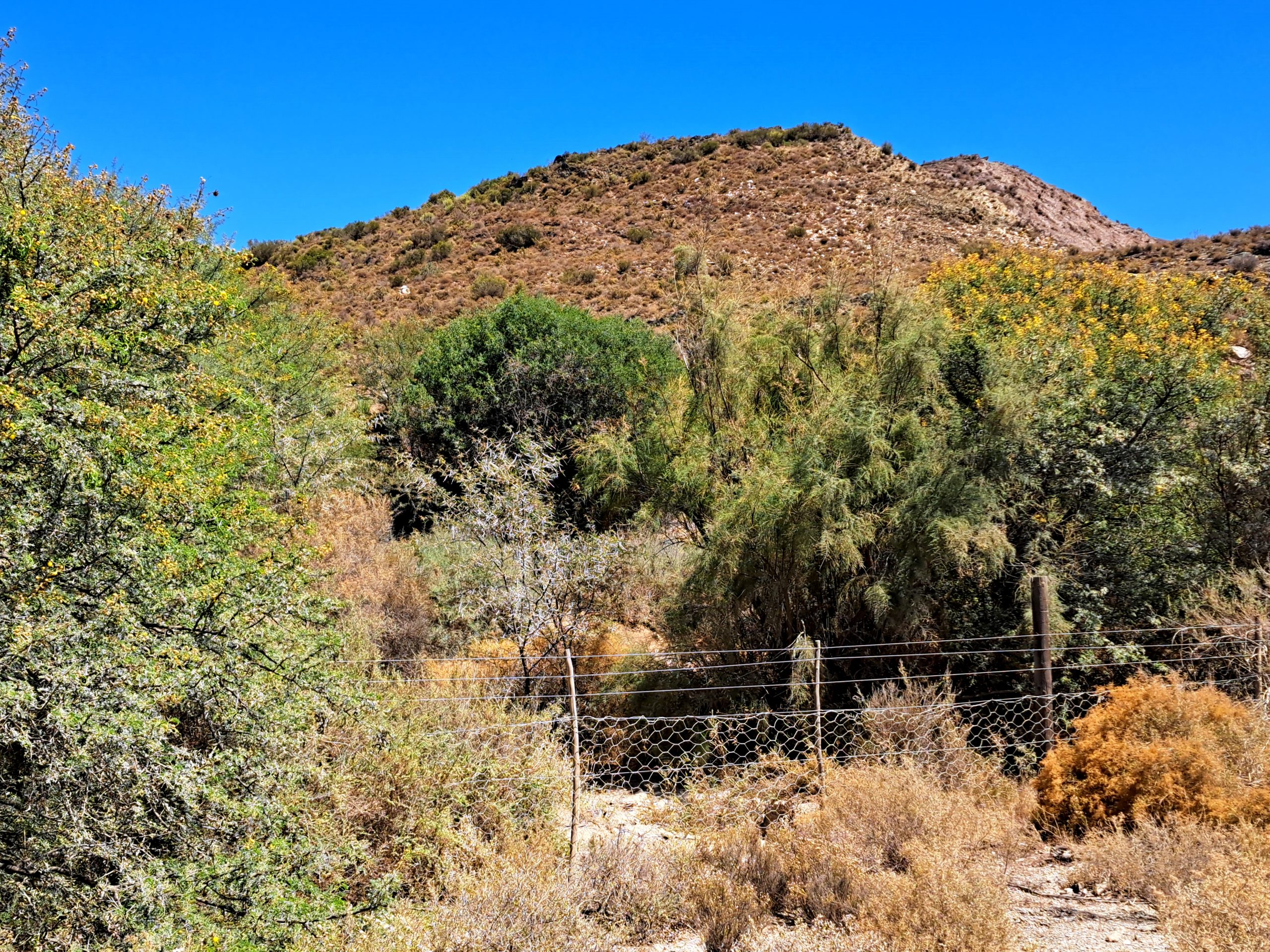
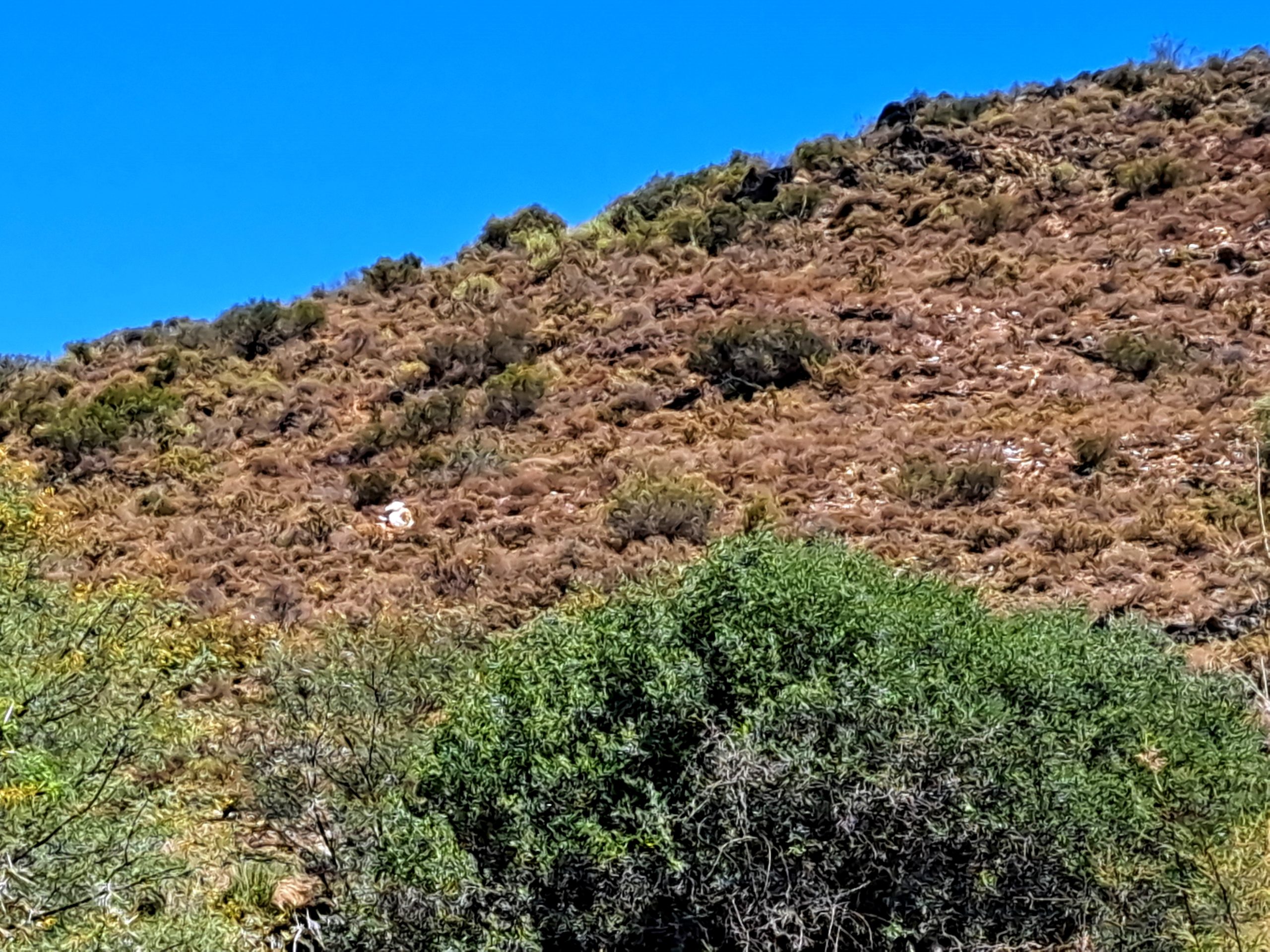
Skaars 100m van my af, aan die anderkant van die pad is die plek vanwaar die skoot geklap het, gemerk met wit klippe.

So, wat het my tot hier gebring? Hier, langs ‘n monument vir ‘n polisieman, gade en pa? Hier, op die spoor van ‘n moordenaar?

Daar is min dinge in die lewe wat jou so vry kan laat voel soos ‘n motorfiets. En as die fiets boonop ‘n Avontuur fiets is, dan kan jy die agterpaaie vat en die wêreld gaan verken. So, as ek hoor van ‘n legende hier, of ‘n storie daar, dan pak ek die Africa Twin en ek gaan soek daai storie. Want dan is dit nie meer net ‘n storie nie, dan word die sinne en karakters en gebeure in daai storie weer werklikheid. Jy hoor nie net die storie nie, jy lééf dit. Want jy was daar.

In Ladismith en Van Wyksdorp se wêreld word daar tot vandag toe stories oor Matthyse vertel. Hoeveel daarvan die waarheid en niks anders as die waarheid is nie, kan ’n mens net raai, maar dat daar meestal met ’n mate van bewondering van hom gepraat word, is seker. En so het die storie my laat beland op die pad na Van Wyksdorp.

’n Mens kan Van Wyksdorp van vier ander dorpe af benader, maar nie een van die paaie is geteer nie. Die pad van Ladismith af het ’n goeie ryvlak omdat dit gereeld geskraap word. Wanneer daar egter ’n voertuig verby kom, moet ’n mens so bietjie spoed verminder, want vir ’n rukkie is daar niks anders as stof voor jou nie.

Die mooiste pad na Van Wyksdorp is dalk die een van Calitzdorp af oor die Rooibergpas. Hom moet jy maar plek-plek versigtig ry. Moet ook nie haastig raak nie, want daar is net te veel plekkies wat jou tot stilhou verlei. Bo-op Rooiberg, byvoorbeeld, is daar ’n piekniekplek waar vroeëre reisigers, dié wat met perdekarre en ossewaens die berge oor is, ’n klipstapel laat verrys het. Met elke oortog is ’n gebed gedoen en ’n klip op die bestaande hoop geplaas.

Om van Riversdal af by Van Wyksdorp uit te kom ry ’n mens deur die lieflike Garciapas (geteer) en dan met die grondpad al langs die Langeberg tot waar die naambordjie jou links laat wegdraai.

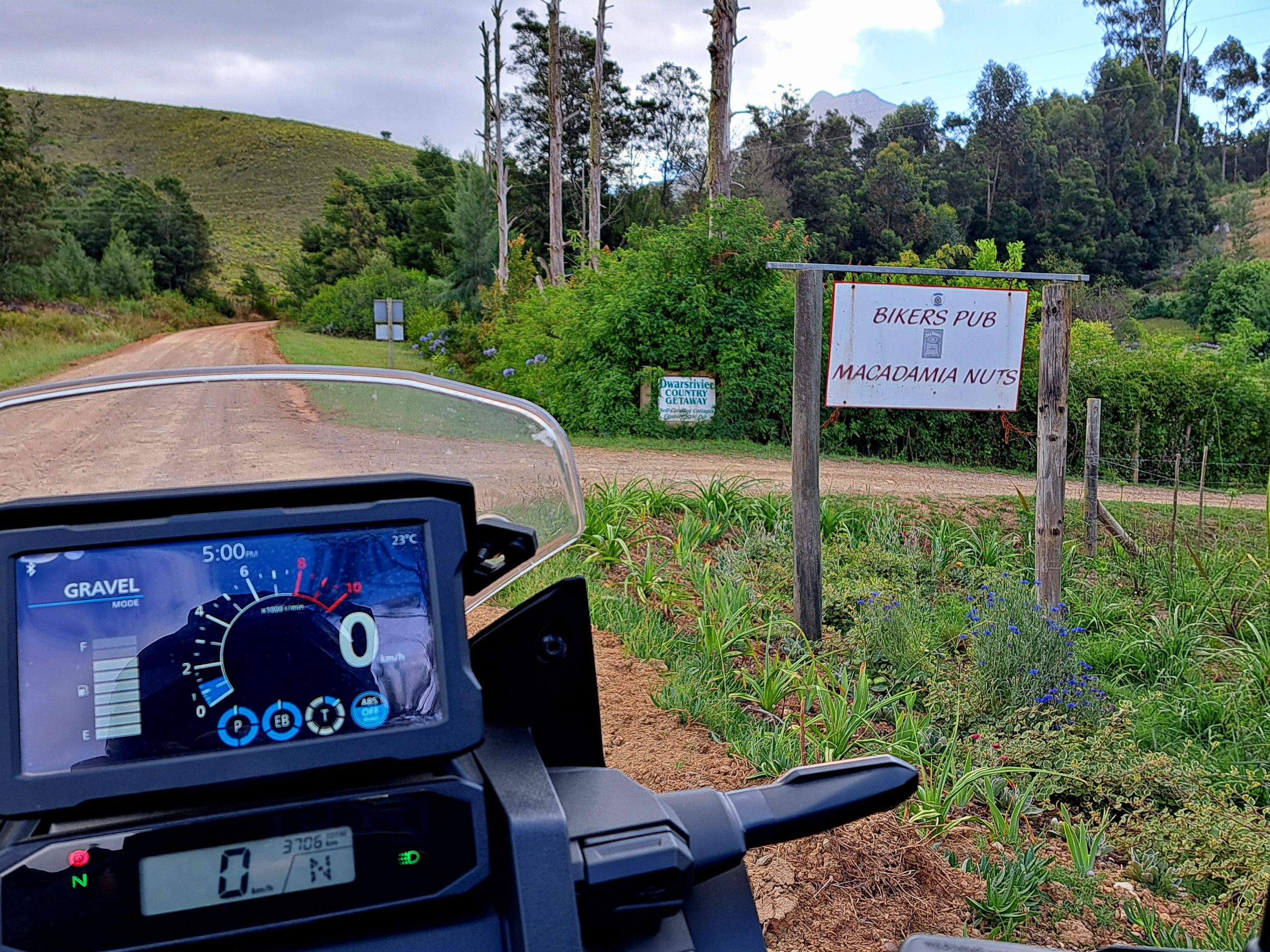
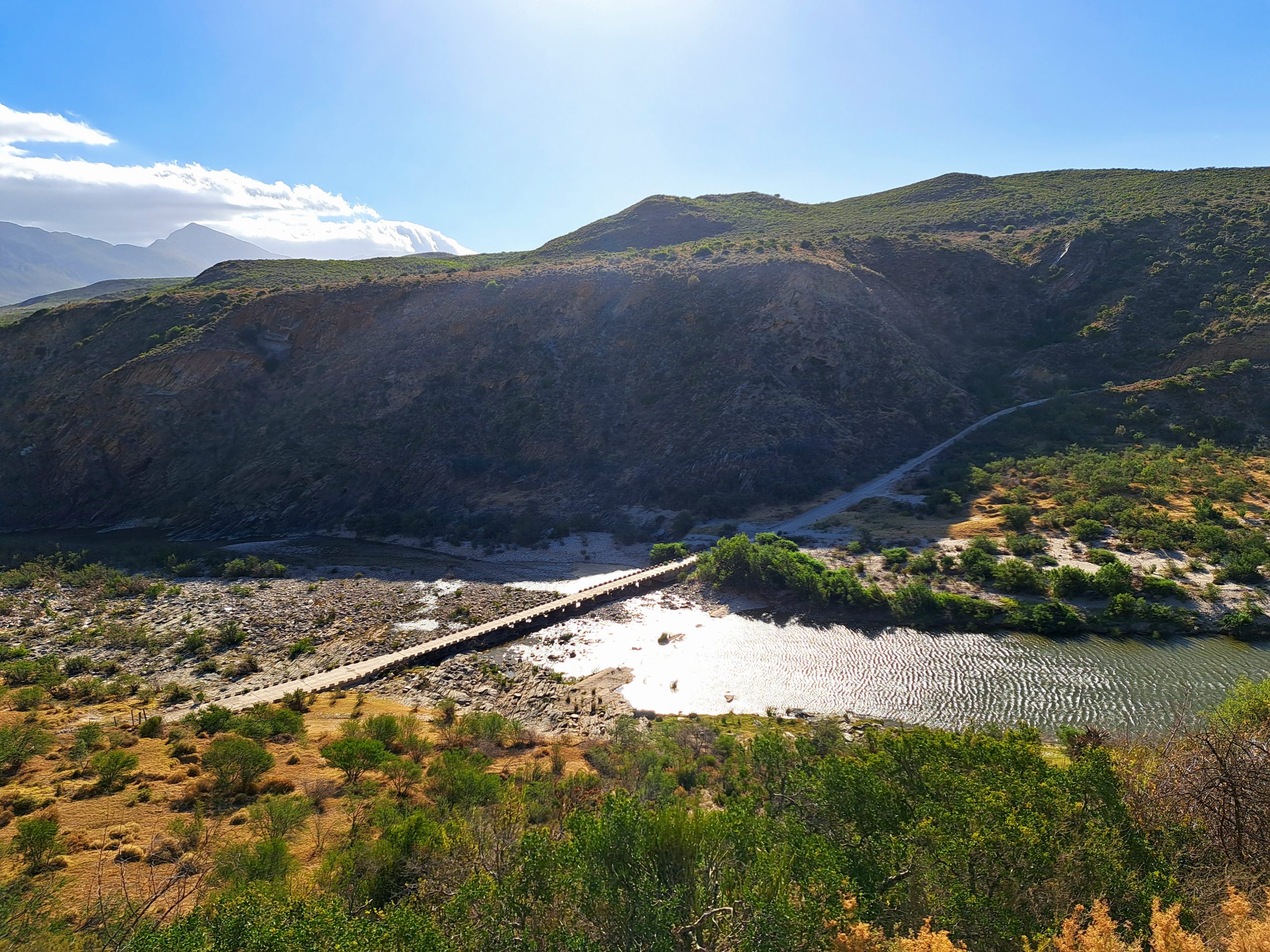
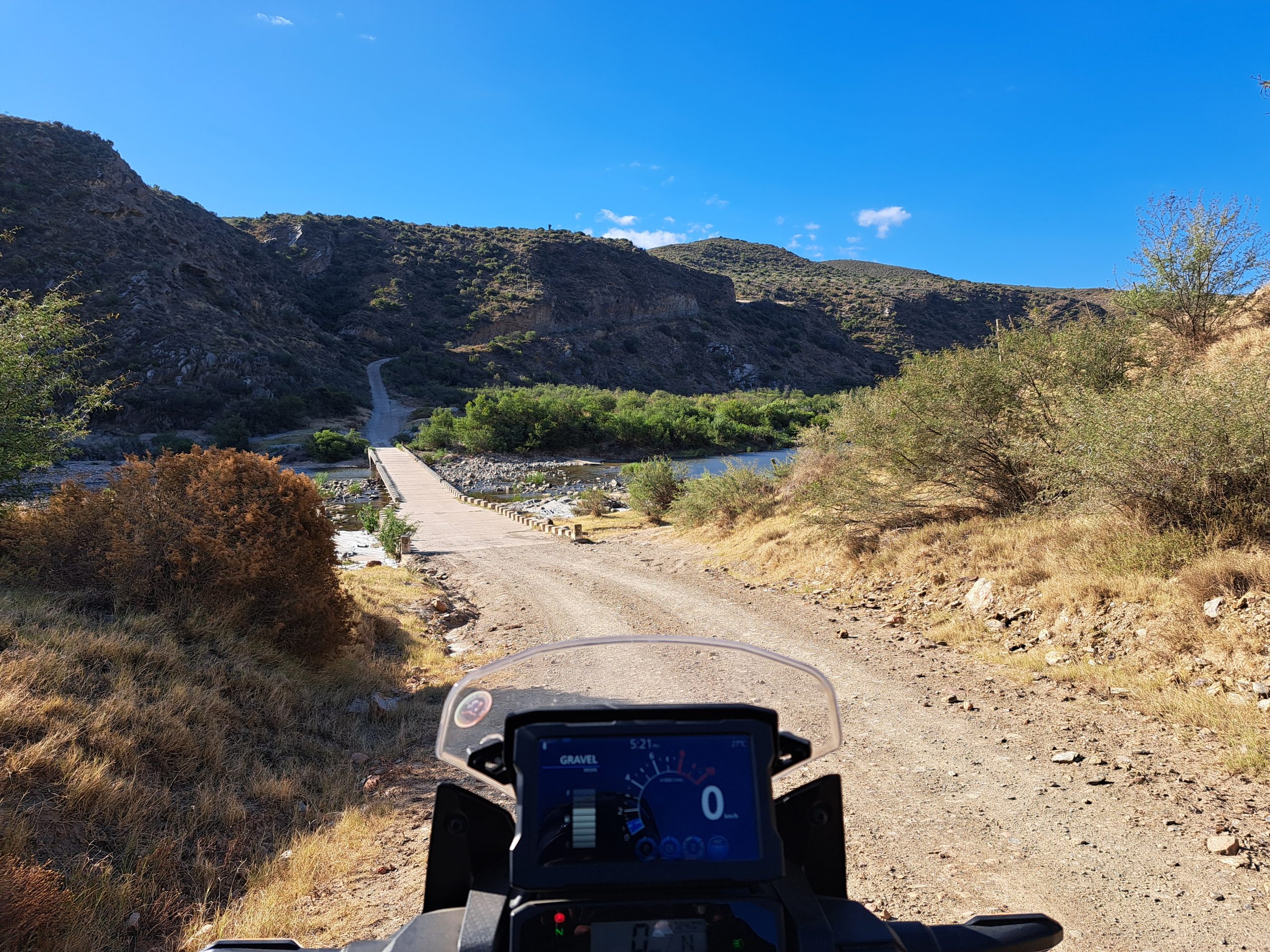
My roete hierheen loop egter vanaf Herbertsdale. Dis ’n mooi kronkelpad tussen plase deur bergop. Ek maak eers ‘n stop op ‘n makadamia plaas, by die in-die-middel-van-nêrens Nuthouse Pub, om die hitte te verdryf en die droë keel te lawe. Daarna verder met die Cloetespas oor die Langeberg tot in die Klein Karoo. Dan dan sak jy af na die Gouritsrivier (’n lekker piekniekplek) en beur opnuut die skerp steiltes uit tot op die Klein Karoo se vlaktes.

Die moordenaar Piet Matthyse sou al hierdie paaie geken het, én ’n klompie ander wat hy net met boerbokke en bobbejane gedeel het. So in die ry raak my verbeelding maklik met my op hol, dan verwag ek so half dat Piet Matthyse in my spieëltjie agter in die pad gaan staan wanneer die stof loop lê. Maar hy is nie daar nie, net sy naam en die verhale oor hom.

Tydens my gesnuffel op die spoor van ’n lank reeds gevange en opgehangde Piet Matthyse het ek op heelwat stories afgekom. Mense sê daai Piet was ’n slim man. Hy’t partykeer agteruit geloop na ’n plek toe sodat die polisie sy spoor verkeerd sou vat. Piet Matthyse se dinge het kleintyd al begin. Op tien of 12 was die gereg reeds op sy spoor, en toe al was hy die polisie een voor. Wanneer die wêreld te warm vir Matthyse geword het, het hy die pad gevat. Meestal weliswaar te voet, maar soms ook, wanneer hy die dag genoeg geld gesteel het, per trein. So het hy na Port Elizabeth gereis, na Durban, Johannesburg, Warrenton, Kimberley en Graaff-Reinet. Hy sou maande uit die Klein Karoo wegbly, lank genoeg om sy ou spore te laat koud word. Ander kere het nuwe moeilikheid wat hy gemaak het of geldnood hom teruggedryf. Eers op 37-jarige leeftyd is hy net buite Van Wyksdorp in hegtenis geneem nadat hy ’n polisieman doodgeskiet het.

As daar een ding is wat ’n mens by Piet Matthyse kan leer, is dit geduld. Hy het ’n opstal of veepos dae lank dopgehou om die kom en gaan van die inwoners te bestudeer voordat hy die huis sou betree om te vat wat hy wil hê, selfs ’n vrou die kere wat hy sy sin kon kry. So het Matthyse kos gesteel en anderman se skaap geslag. Op ’n dag het hy by ’n winkel op Kareevlaktestasie ingebreek en ’n briefie agtergelaat: “Oubaas, ek is jammer die winkel was toe. Ek het dit toe oopgebreek en my sommer self gehelp en sal die winkel weer goed toemaak. Ek is nou ’n soldaat. Sê groete aan Ma.” Toe hy ’n veewagter se kos gegaps het, het hy vir die ou man geskrywe: “Oompie, ek sit ’n paar geldstukkies vir jou neer, want ek het nie die kos gesteel nie, ek het mos daarvoor betaal – Piet Soldaat.” ’n Man met humorsin, onse Piet. Van tyd tot tyd is perdekommando’s agter hom aangestuur, maar niemand kon hom vastrek nie.

Nadat hy die skaapwagter Jan Kamfer se huis rot en kaal besteel het, was daar van Jan se vrou, Roos, geen spoor nie. Eers later het die polisie uitgevind dat sy vrywillig saam met Piet die berge in is en daar het hulle haar later in hegtenis geneem.

Piet skryf op ’n Union Brand Jelly Crystals-pakkie: “Ek loop saam met die itokloosie. Op Vrydag sal ek Roos weer kom haal. Ek gaan Langeberg op, dan kom ek Swartberg af. Stilletjies.”

Maar toe daag hy die nag van 22 Desember 1946 omstreeks middernag gewapen met ’n gesteelde geweer by Jim en Esther Grootboom se eenslaapkamerhuisie in die George-distrik op, en daarna sou niks meer snaaks wees nie. Grootboom het uitgeroep: “Die Here behoed ons!” Skote het geklap. In die sitkamer het twee kinders, Annie Grootboom (17) en Willem Plaatjies (12), grootoog gesit. Annie het probeer wegkom, maar Piet het haar gevang. Hy is met die twee veld in, waar Willem weggekom en na ’n plaashuis gehardloop het om hulp te soek.

Piet het geweet dat die polisie nou met nuwe ywer na hom sou soek. Hy had niks meer om te verloor nie en het Annie verkrag nadat hy haar met die dood gedreig het. Daarna het Piet haar laat gaan. Sy het ’n vragmotor voorgekeer.

Die nuus van die Grootboom-moorde het soos ’n veldbrand deur die Klein Karoo versprei. Piet Matthyse was nie meer net ’n inbreker en veedief nie. Die polisie, bygestaan deur ’n bloedhond, het Piet se spoor gevolg van waar hy by ’n veewagter se huis ingebreek het. Op Kersdag het hulle afgekom op ’n plek waar die voortvlugtige geslaap het. Die kole van sy vuur het nog gegloei.

Op 26 Desember het Matthyse ’n ma en haar twee dogters gedwing om hom te vergesel. Twee nagte moes die ouer vrou ter oorlewing saam met hom slaap. Toe een dogter op 28 Desember flou val, het hy die drie laat omdraai huis toe. Piet Matthyse se spoor draai by Volmoed, wes van Oudtshoorn, in die rigting van Van Wyksdorp.

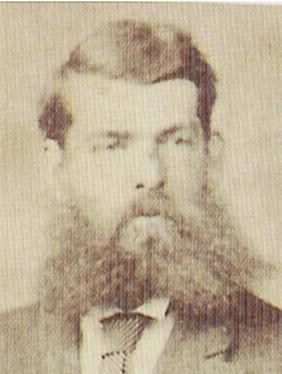
Die Burger berig op 31 Desember 1946: “’n Kleurling is gistermiddag omstreeks vyfuur sowat 6 myl buitekant Van Wyksdorp in die rigting van Riversdal in hegtenis geneem nadat die soekgeselskap van sowat 100 konstabels en nagenoeg net soveel boere deur die dag die omgewing gefynkam het. Gisteroggend omstreeks agtuur is Kaptein B.M. van Heerden, Distrikskommandant van Polisie op Oudtshoorn, in ’n geweergeveg met die Kleurling gedood. Twee konstabels is in die geveg gewond.”

Kaptein van Heerden se dogtertjie het, toe hy sy huis die dag voor die skietery verlaat, vir hom gesê: “Moenie gaan nie, Pappa, die outa sal Pappa net doodmaak.” Ironies was die kaptein se doopname Barend Matthys. Hy het daardie oggend drie keer teruggegaan om sy geliefdes te groet.

In die hof het Piet Matthyse die volgende gesê: “Die meeste moorde wat in die wêreld plaasvind, kom deur ’n meisiemens. Ek sou like dat sy ook iets oorkom.”

Het die onbekende “sy” dalk Piet Matthyse se hart gebreek sodat hy onverdiende wraak teen alle vroue gekoester het, of had hy maar, soos die Bybelse Adam, iemand nodig om die las van sy eie swakheid te help dra?

Kaptein van Heerden se weduwee, Fransie, het korrespondeer met Piet Matthyse in die tronk, hom later besoek en volgens vertellings het hy tot bekering gekom en om vergifnis gevra voor sy dood.

Maar dit is nie die einde van die storie nie…

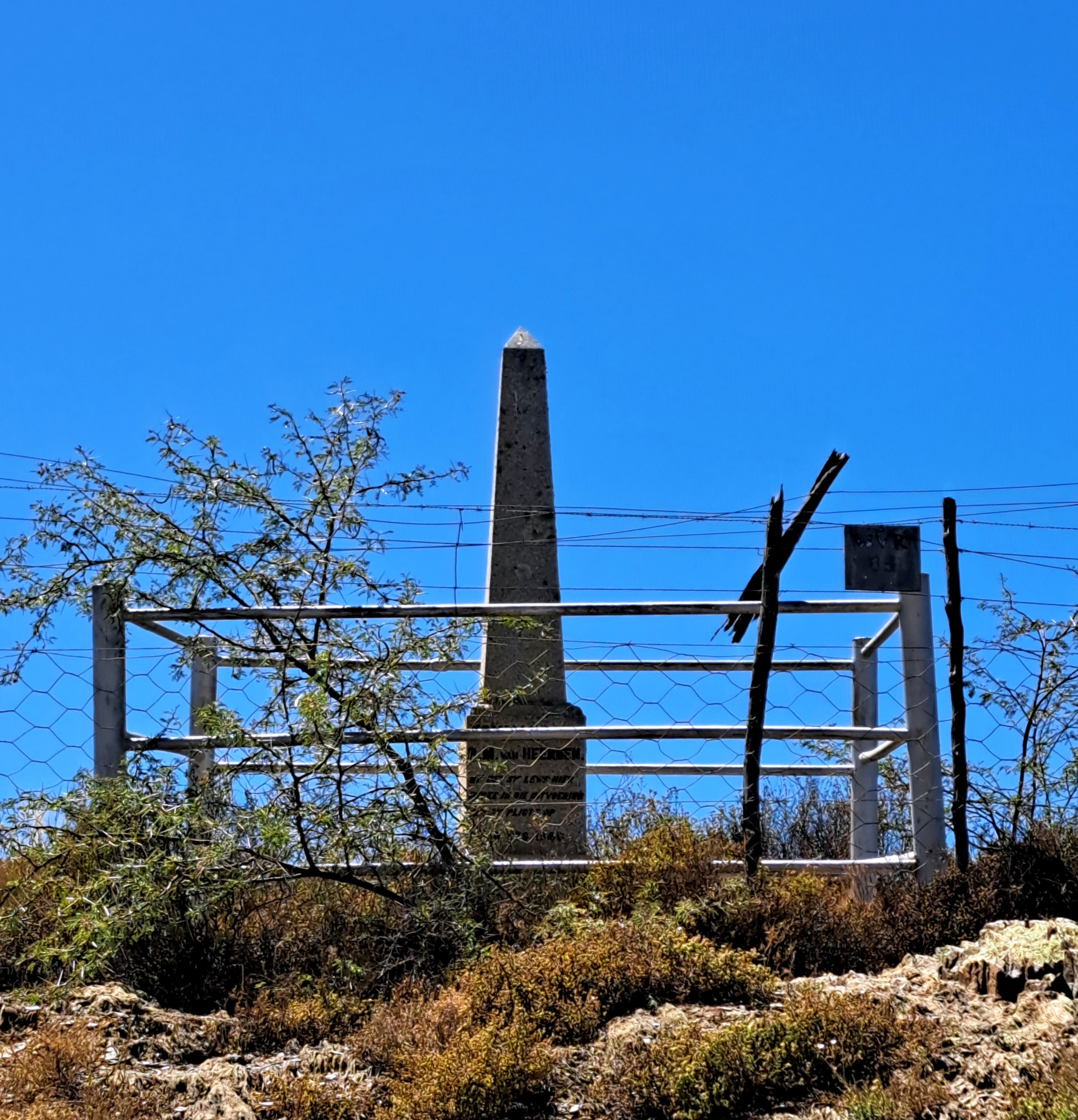
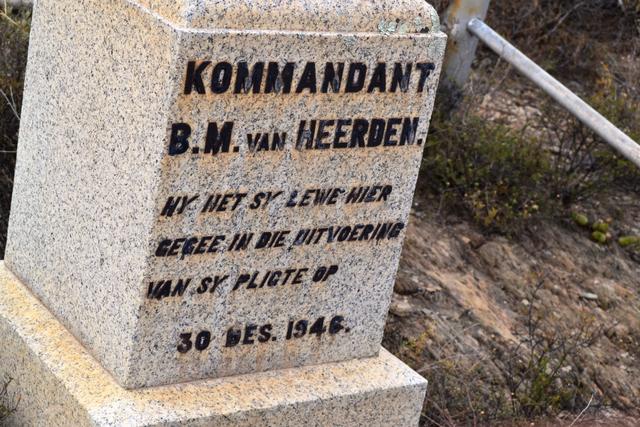
Die insident het ‘n groot impak gehad op die lewe van Soon van Wyk. Hy was nog nie eers ‘n korrespondent vir Die Burger nie, toe beland sy berig oor die insident in 1946 op die voorblad van die koerant. Die einste Soon van Wyk het later, met behulp van ene Barend Shreuders eiehandig die monument vir Kapt B.M. van Heerden by Soutkloof opgerig. Kaptein van Heerden se vrou, dogter en seun was teenwoordig met die bekendstelling. Die inskripsie lees: “Kommandant B.M. van Heerden. Hy het sy lewe hier gegee in die uitvoering van sy pligte op 30 Dec 1946.” Soon van Wyk het die tralies van die Monument jaarliks kom verf tot en met sy aftrede.

En so beland ek hier. Op die snikhete Vrydag middag langs ‘n stofpad staan my ysterperd en afkoel. Vandag lyk die monument en traliewerk nog heel skaflik. As jy ooit na Van Wyksdorp ry, kom stop hier, skakel die enjin af, en luister. Nie na wát nie, luister sommer net.

Want dié wêreld het nog baie stories…

Ken julle die storie van die laaste man wat in George in die openbaar gehang is? Gert was ‘n voorslagboer, veedief, geweldenaar, moordenaar of selfs ‘n minnaar. Dit hang net af met wie jy praat. Wat wel waar is, is dat sy bynaam Bloubaard was. En hy het hier naby geboer…


Gedenksteen vir Kommandant B.M. van Heerden.


Wit geverfde klippe teen die koppie oorkant die pad wys vanwaar die skote geklap het.


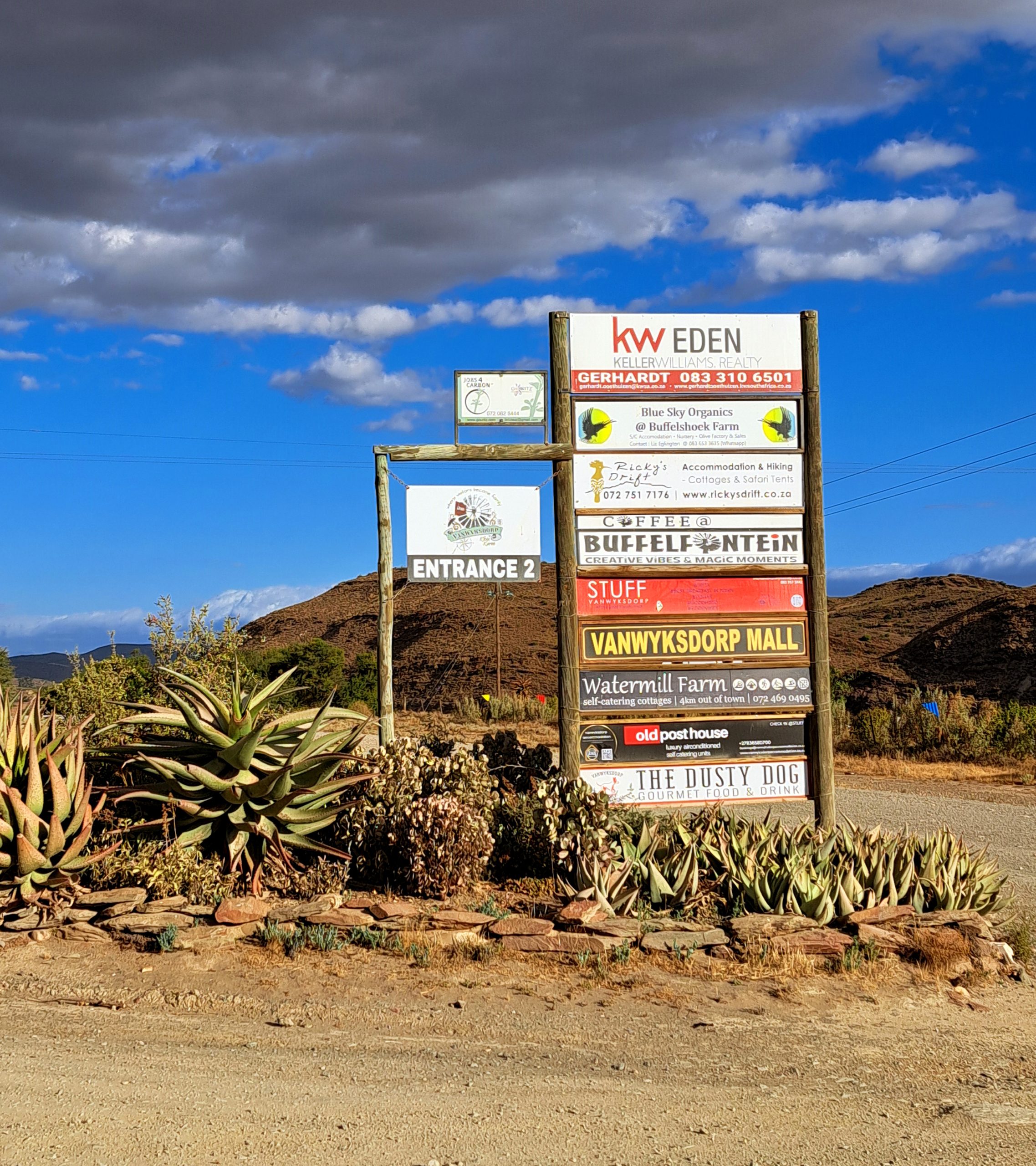
Die ingang na Van Wyksdorp.


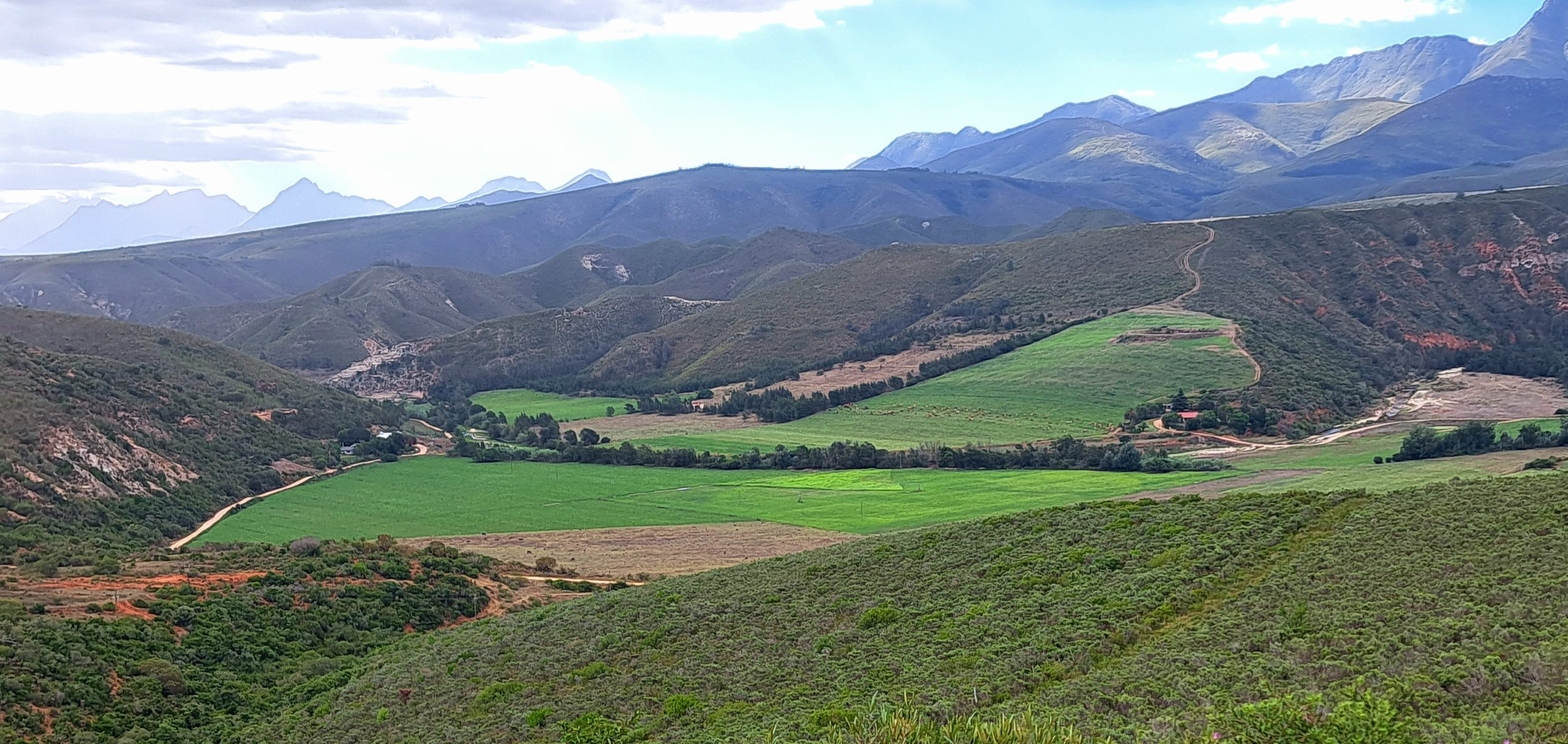
Die pad vanaf Herbertsdale oor Cloetes Pas na Van Wyksdorp.


Nuthouse Pub op Cloetes Pas.


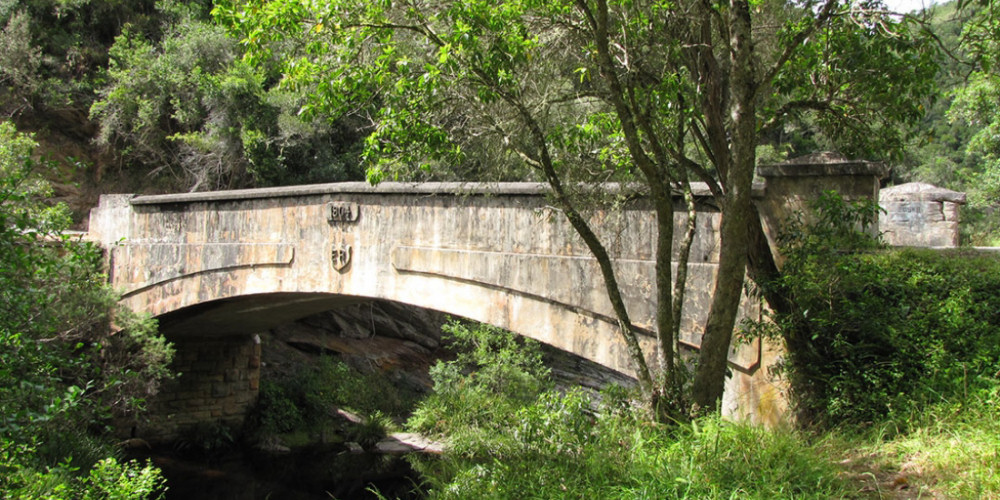
Brug oor die Gouritsrivier (’n lekker piekniekplek) voor jy opnuut opbeur teen die skerp steiltes uit tot op die Klein Karoo se vlaktes.


*Bronne: Verskeie boorlinge van die distrik Ladismith, die C.P. Nel-museum op Oudtshoorn, geocaching.com, en die artikel “Die moordenaar van die Klein Karoo” deur R.G. Grebe in Die Brandwag van 10 Desember 1976.

**As Bloubaard se storie jou nuuskierigheid geprikkel het, lees die boek “Roman” deur Cas Wepener, saal jou ysterperd op en ry. Gaan soek Bloubaard se graf en as jy hom kry, kyk na die berge en klowe om jou, en luister.