Showing posts with label Road Trip. Show all posts

Tuesday, July 28, 2026

I Went Looking for the Ocean… and Found a 200-Year-Old Secret

From Gwaing River Mouth to the forgotten story of Chief Dikkop and Pacaltsdorp.

There are days when you set out with no real agenda, just a quiet plan to find a stretch of coastline where you can hear the ocean properly. Just a short drive from George, tucked away beyond Pacaltsdorp, lies one of the Garden Route’s lesser-known treasures, the beautiful Gwaing River Mouth. While nearby beaches like Herolds Bay often attract the crowds, Gwaing remains a quieter escape, a place where river, ocean and rugged coastline meet in a peaceful natural setting.

But places like this have a habit of revealing more than they promise. What looks like an ordinary coastal stop quickly becomes a gateway into something far older, where the landscape starts telling stories that stretch back more than two centuries. That’s when you begin to realise that you’ve accidentally stepped onto a forgotten discovery route, layered with history that most people drive past without ever noticing.

So after a short ride I find myself where the Gwaing River flows down from the Outeniqua Mountains and eventually empties into the Indian Ocean at a small estuary about 3 km east of Herolds Bay. The estuary itself is relatively small, roughly 1.4 km long, and is classified as a temporarily closed estuary, meaning sandbanks sometimes seal the mouth from the sea depending on tides and river flow.

But what the Gwaing lacks in size, it more than makes up for in atmosphere. Steep cliffs frame the golden sand beach while the river winds gently toward the ocean, creating calm pools and sheltered spots perfect for exploring. Visitors often come here for fishing, long beach walks, picnics or simply to sit and watch the waves roll in.

During winter and spring, visitors sometimes spot whales passing along the coast, while dolphins frequently patrol the waves just offshore. At sunset the cliffs glow warm orange and the river reflects the sky like a mirror, one of those quiet Garden Route moments that stays with you long after you leave.

The nearby community of Pacaltsdorp has a long and fascinating history dating back to the early 1800s, when the mission station of Hoogekraal was established and later renamed after missionary Charles Pacalt. Being a sucker for history I started looking into the history of Pacaltsdorp, which turned into a whole adventure of its own. The story of Pacaltsdorp is really a story of two founders: Charles Pacalt, whose name the town carries, and Chief Dikkop, whose vision brought the mission station into existence. Most visitors know one name, but few know the other. Chief Dikkop is one of the most important, yet often overlooked, figures in the Southern Cape story.

Chief Dikkop (Kaptein Dikkop) was the leader of the local Khoikhoi community living at Hoogekraal, the settlement that later became Pacaltsdorp. Without Dikkop, Pacaltsdorp may never have existed. Chief Dikkop had the foresight to invite a missionary because he saw opportunities for advancement for his community.

In 1812, after meeting missionaries from the London Missionary Society, Dikkop repeatedly requested that a resident missionary be sent to Hoogekraal. His request was eventually granted when Reverend Charles Pacalt was assigned to the settlement in 1813. According to local accounts, Dikkop personally travelled by ox wagon to Suurbraak to fetch Pacalt, a journey that reportedly took four weeks.

After Reverend Pacalt's death in 1818, the Hoogekraal settlement was renamed Pacaltsdorp in his honour. There are several historic sites from that time. Before a church was built, Rev. Charles Pacalt built the “Patat Huisie”, considered the oldest surviving structure in Pacaltsdorp.

This was originally Rev. Pacalt's second mission cottage, built around 1813 with sod walls, a thatched roof and a cow-dung floor. One of the old manse buildings in Pacaltsdorp.

The Old Manse buildings are the houses where the ministers (or "dominees") of the mission station lived. In church terminology, a manse is simply the minister's residence. What's interesting about Pacaltsdorp is that there wasn't just one manse. Over the years, several were built as the mission grew. After Rev. Charles Pacalt's death, Rev. William Anderson arrived and built a substantial two-storey stone residence next to Pacalt's small cottage. The building featured thick stone walls and extensive use of yellow-wood timber. It was considered quite grand compared to the humble mission cottages around it.

The “Patat Huisie” was declared a national monument in 1976. Later, John Anderson used it to store his famous "six months patats", which gave the building its nickname. Rev. Anderson’s home also was declared a National Monument in 1976.  

The Andersons occupied the house for 30 years. After both Mr. and Mrs. Andersons death the three spinster daughters moved away and the Atkinsons took over.  

The Klipkerk of Pacaltsdorp is arguably the most important historic building in the George area and one of the oldest surviving churches in the Southern Cape. The church was built between 1822 and 1825, only a few years after the death of Rev. Charles Pacalt. It was officially opened on 19 June 1825 by Dr. John Philip of the London Missionary Society. The building was constructed largely by local residents of the mission station using locally available materials of stone, yellowwood, clay and glass.  

What makes it unique is its architecture. Most early Cape churches followed the simple Cape Dutch style, but the Pacaltsdorp church is a rare example of early Gothic Revival (often described locally as Norman-style) architecture in South Africa. Architectural historians have described it as one of the finest surviving early Gothic Revival buildings in the country.

Some fascinating details include walls that are nearly a metre thick in places. The tall square stone tower that can be seen from far across Pacaltsdorp. The Gothic-style window tracery was crafted from yellowwood. It is a design that resembles a small medieval church rather than a typical Cape mission church. When you stand in front of it, it feels more like something you would expect to find in rural England than in the Garden Route.

The church stands at the heart of the mission settlement that Chief Dikkop helped create. However, there is a poignant twist in the story. Dikkop died in 1816, before the church was completed, and because he apparently never formally converted to Christianity, he was buried outside the mission cemetery. His grave is about 100 metres from the church. His grave remains one of the most significant, and least-visited, historical sites in the Garden Route. 


Located in the old cemetery near the Klipkerk, is a small enclosed section reserved for the missionaries, their spouses, and a handful of individuals who played key roles in the early mission community. 

Among those buried in Missionaries' Acre are Rev. Charles Pacalt, Rev. William Anderson, who succeeded Pacalt and played a major role in the growth of the settlement and Epenita Jantjies, a particularly important figure because she was Rev. Pacalt's first Khoi convert, baptised in 1814. She remained a member of the church for more than four decades and is one of the few local indigenous people buried within the Acre.


 If you are ever in the area, take a Historic Walk.

  1. Start at the Stone Church.

  2. See Missionaries' Acre.

  3. See the Patat Huisie and old manse buildings.

  4. Visit Chief Dikkop's grave.

This is one of the easiest and most rewarding self-guided historical walks in the Garden Route. You're effectively walking through a living museum, all within a few hundred metres of one another. That concentration of early 19th-century history is almost unmatched anywhere else in the Southern Cape.

Sometimes you set out with something simple in mind, like a quick out-ride to the Gwaing River Mouth, only to find yourself stepping into something far older and richer than expected. A short turn off the main road can quietly pull you onto a 200-year-old discovery route. It is one of those reminders that travel does not always require distance. Some of the most interesting stories are not “somewhere out there”, but right here in your own backyard, waiting behind familiar place names and gravel roads you’ve driven past a hundred times without really seeing them.  

Saturday, April 11, 2026

Op die spoor van ‘n moordenaar

Daar is dinge wat gebeur in hierdie wêreld wat ons nooit sal verstaan nie. Ons kan dit net aanvaar en later daarop terugkyk en weet dat alles so gebeur het.

Toe die moordenaar Piet Matthyse op 8 Oktober 1947 in die rondgaande hof op Oudtshoorn deur regter G. Steyn ter dood veroordeel is, was dit die herinneringe aan ’n vrou, en nie die bedreiging van die galg nie, waaroor hy vir die hof iets te sê gehad het, want Matthyse was nie net ’n moordenaar nie. Hy was ook ’n verleier van vroue en uiteindelik ’n verkragter.

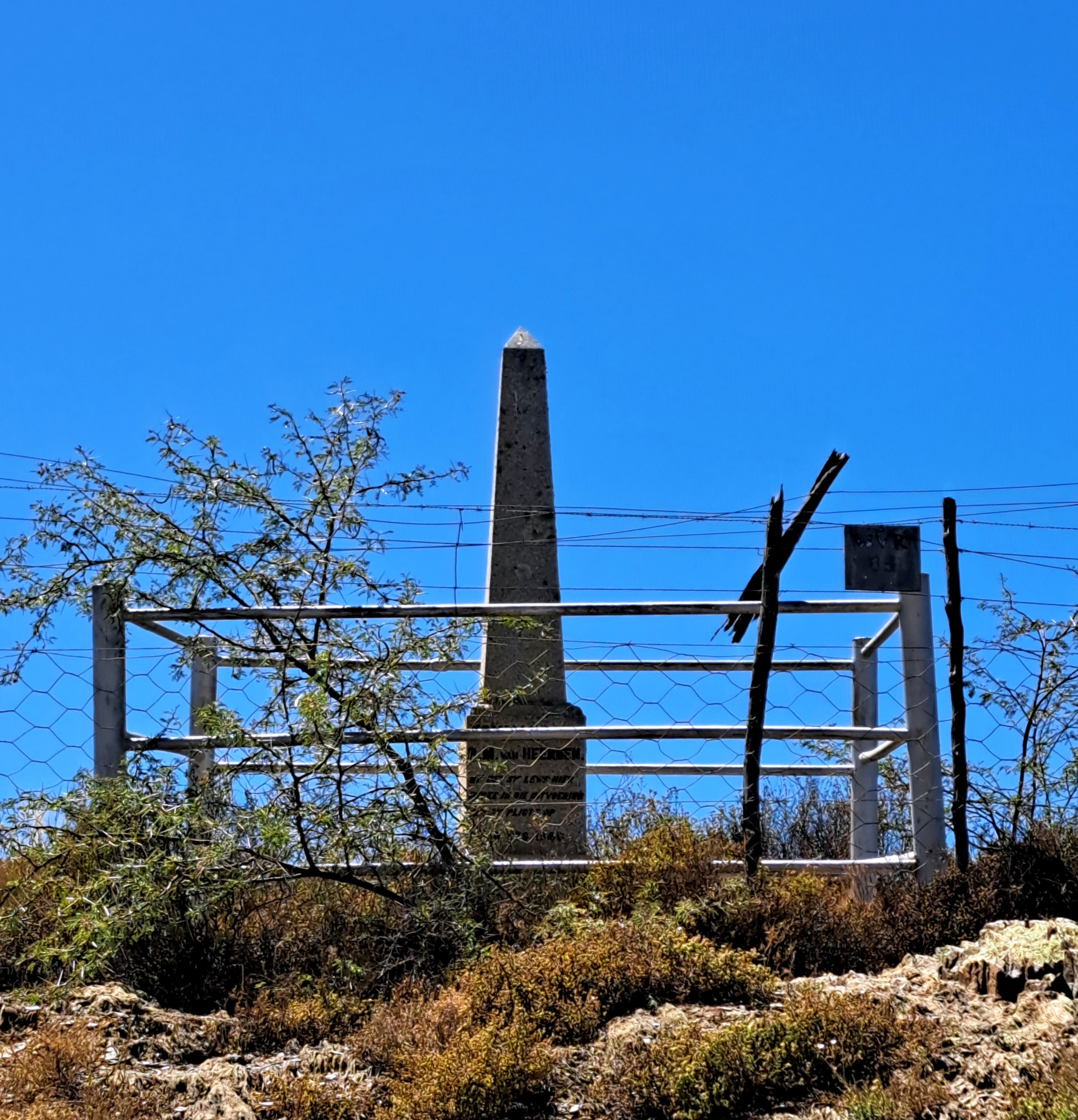
So beland ek, laat op ‘n Vrydag middag, langs die monument van ‘n man. ‘n Skielike knal van die donderweer laat my hop soos ek skrik. Dis asof die natuur self die tragedie wat hom destyds hier afgespeel het, herhaal.

En dit klink belaglik as jy jouself nie daai omstandighede bevind nie, maar ek kon dit aanvoel in my gebeendere. Ek staan alleen hier, maar die mense van die gebeure van daai tyd kon ek aanvoel, asook die boosheid wat hulle hier vasgekeer het en die waarskuwing van ‘n kind wat werklikheid geword het op daardie verskriklike dag.

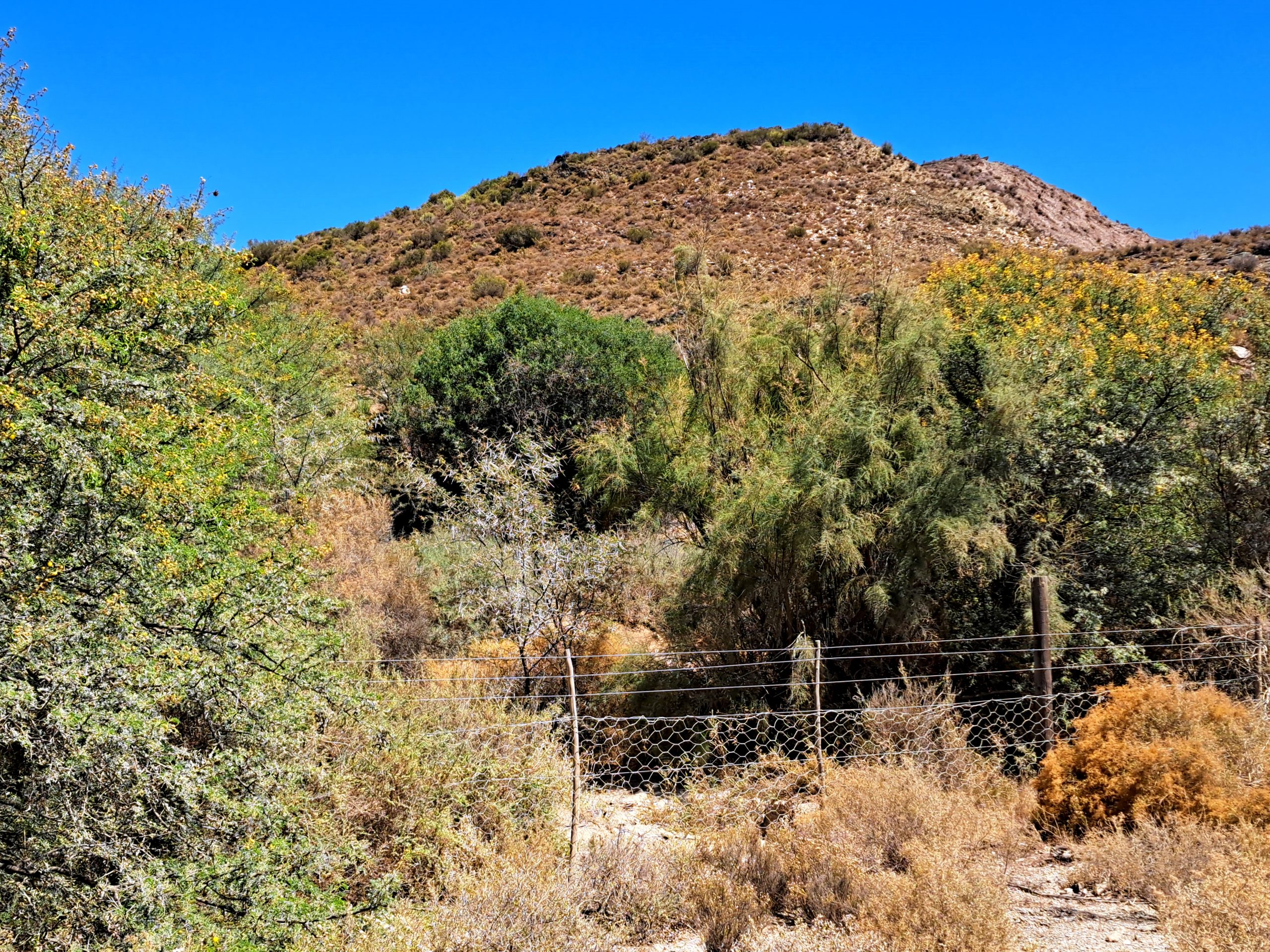
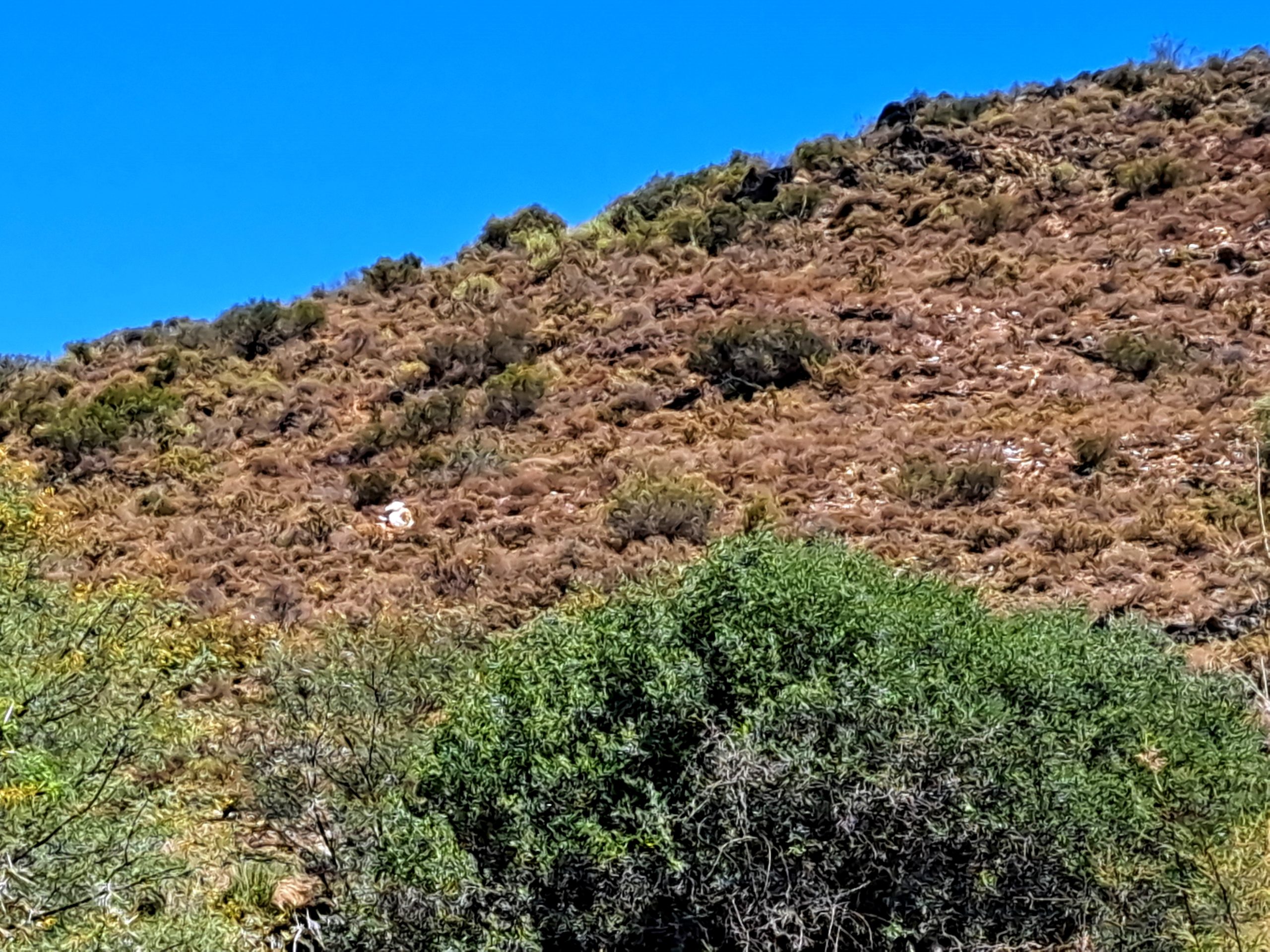
Skaars 100m van my af, aan die anderkant van die pad is die plek vanwaar die skoot geklap het, gemerk met wit klippe.

So, wat het my tot hier gebring? Hier, langs ‘n monument vir ‘n polisieman, gade en pa? Hier, op die spoor van ‘n moordenaar?

Daar is min dinge in die lewe wat jou so vry kan laat voel soos ‘n motorfiets. En as die fiets boonop ‘n Avontuur fiets is, dan kan jy die agterpaaie vat en die wêreld gaan verken. So, as ek hoor van ‘n legende hier, of ‘n storie daar, dan pak ek die Africa Twin en ek gaan soek daai storie. Want dan is dit nie meer net ‘n storie nie, dan word die sinne en karakters en gebeure in daai storie weer werklikheid. Jy hoor nie net die storie nie, jy lééf dit. Want jy was daar.

In Ladismith en Van Wyksdorp se wêreld word daar tot vandag toe stories oor Matthyse vertel. Hoeveel daarvan die waarheid en niks anders as die waarheid is nie, kan ’n mens net raai, maar dat daar meestal met ’n mate van bewondering van hom gepraat word, is seker. En so het die storie my laat beland op die pad na Van Wyksdorp.

’n Mens kan Van Wyksdorp van vier ander dorpe af benader, maar nie een van die paaie is geteer nie. Die pad van Ladismith af het ’n goeie ryvlak omdat dit gereeld geskraap word. Wanneer daar egter ’n voertuig verby kom, moet ’n mens so bietjie spoed verminder, want vir ’n rukkie is daar niks anders as stof voor jou nie.

Die mooiste pad na Van Wyksdorp is dalk die een van Calitzdorp af oor die Rooibergpas. Hom moet jy maar plek-plek versigtig ry. Moet ook nie haastig raak nie, want daar is net te veel plekkies wat jou tot stilhou verlei. Bo-op Rooiberg, byvoorbeeld, is daar ’n piekniekplek waar vroeëre reisigers, dié wat met perdekarre en ossewaens die berge oor is, ’n klipstapel laat verrys het. Met elke oortog is ’n gebed gedoen en ’n klip op die bestaande hoop geplaas.

Om van Riversdal af by Van Wyksdorp uit te kom ry ’n mens deur die lieflike Garciapas (geteer) en dan met die grondpad al langs die Langeberg tot waar die naambordjie jou links laat wegdraai.

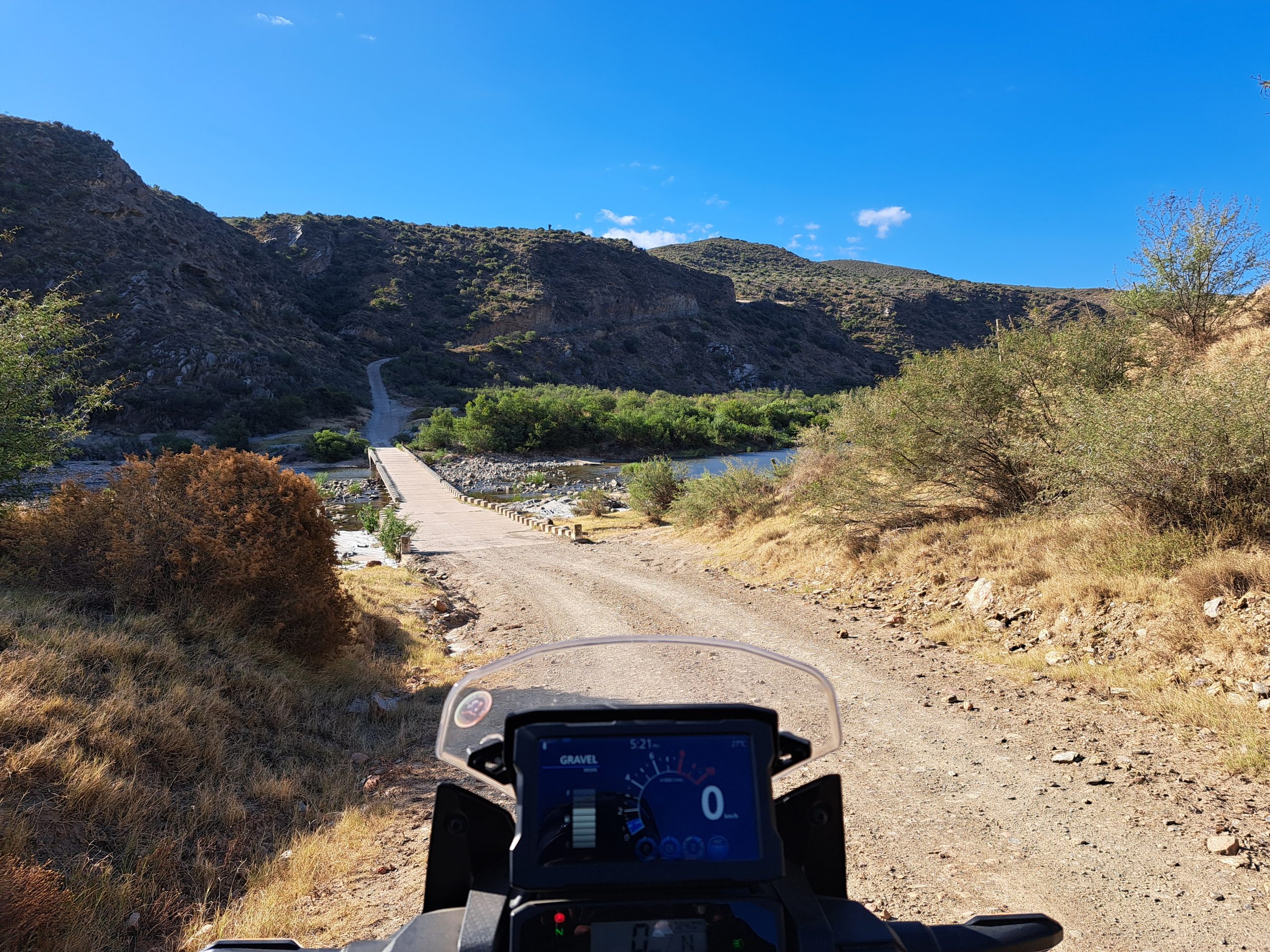
My roete hierheen loop egter vanaf Herbertsdale. Dis ’n mooi kronkelpad tussen plase deur bergop. Ek maak eers ‘n stop op ‘n makadamia plaas, by die in-die-middel-van-nêrens Nuthouse Pub, om die hitte te verdryf en die droë keel te lawe. Daarna verder met die Cloetespas oor die Langeberg tot in die Klein Karoo. Dan dan sak jy af na die Gouritsrivier (’n lekker piekniekplek) en beur opnuut die skerp steiltes uit tot op die Klein Karoo se vlaktes.

Die moordenaar Piet Matthyse sou al hierdie paaie geken het, én ’n klompie ander wat hy net met boerbokke en bobbejane gedeel het. So in die ry raak my verbeelding maklik met my op hol, dan verwag ek so half dat Piet Matthyse in my spieëltjie agter in die pad gaan staan wanneer die stof loop lê. Maar hy is nie daar nie, net sy naam en die verhale oor hom.

Tydens my gesnuffel op die spoor van ’n lank reeds gevange en opgehangde Piet Matthyse het ek op heelwat stories afgekom. Mense sê daai Piet was ’n slim man. Hy’t partykeer agteruit geloop na ’n plek toe sodat die polisie sy spoor verkeerd sou vat. Piet Matthyse se dinge het kleintyd al begin. Op tien of 12 was die gereg reeds op sy spoor, en toe al was hy die polisie een voor. Wanneer die wêreld te warm vir Matthyse geword het, het hy die pad gevat. Meestal weliswaar te voet, maar soms ook, wanneer hy die dag genoeg geld gesteel het, per trein. So het hy na Port Elizabeth gereis, na Durban, Johannesburg, Warrenton, Kimberley en Graaff-Reinet. Hy sou maande uit die Klein Karoo wegbly, lank genoeg om sy ou spore te laat koud word. Ander kere het nuwe moeilikheid wat hy gemaak het of geldnood hom teruggedryf. Eers op 37-jarige leeftyd is hy net buite Van Wyksdorp in hegtenis geneem nadat hy ’n polisieman doodgeskiet het.

As daar een ding is wat ’n mens by Piet Matthyse kan leer, is dit geduld. Hy het ’n opstal of veepos dae lank dopgehou om die kom en gaan van die inwoners te bestudeer voordat hy die huis sou betree om te vat wat hy wil hê, selfs ’n vrou die kere wat hy sy sin kon kry. So het Matthyse kos gesteel en anderman se skaap geslag. Op ’n dag het hy by ’n winkel op Kareevlaktestasie ingebreek en ’n briefie agtergelaat: “Oubaas, ek is jammer die winkel was toe. Ek het dit toe oopgebreek en my sommer self gehelp en sal die winkel weer goed toemaak. Ek is nou ’n soldaat. Sê groete aan Ma.” Toe hy ’n veewagter se kos gegaps het, het hy vir die ou man geskrywe: “Oompie, ek sit ’n paar geldstukkies vir jou neer, want ek het nie die kos gesteel nie, ek het mos daarvoor betaal – Piet Soldaat.” ’n Man met humorsin, onse Piet. Van tyd tot tyd is perdekommando’s agter hom aangestuur, maar niemand kon hom vastrek nie.

Nadat hy die skaapwagter Jan Kamfer se huis rot en kaal besteel het, was daar van Jan se vrou, Roos, geen spoor nie. Eers later het die polisie uitgevind dat sy vrywillig saam met Piet die berge in is en daar het hulle haar later in hegtenis geneem.

Piet skryf op ’n Union Brand Jelly Crystals-pakkie: “Ek loop saam met die itokloosie. Op Vrydag sal ek Roos weer kom haal. Ek gaan Langeberg op, dan kom ek Swartberg af. Stilletjies.”

Maar toe daag hy die nag van 22 Desember 1946 omstreeks middernag gewapen met ’n gesteelde geweer by Jim en Esther Grootboom se eenslaapkamerhuisie in die George-distrik op, en daarna sou niks meer snaaks wees nie. Grootboom het uitgeroep: “Die Here behoed ons!” Skote het geklap. In die sitkamer het twee kinders, Annie Grootboom (17) en Willem Plaatjies (12), grootoog gesit. Annie het probeer wegkom, maar Piet het haar gevang. Hy is met die twee veld in, waar Willem weggekom en na ’n plaashuis gehardloop het om hulp te soek.

Piet het geweet dat die polisie nou met nuwe ywer na hom sou soek. Hy had niks meer om te verloor nie en het Annie verkrag nadat hy haar met die dood gedreig het. Daarna het Piet haar laat gaan. Sy het ’n vragmotor voorgekeer.

Die nuus van die Grootboom-moorde het soos ’n veldbrand deur die Klein Karoo versprei. Piet Matthyse was nie meer net ’n inbreker en veedief nie. Die polisie, bygestaan deur ’n bloedhond, het Piet se spoor gevolg van waar hy by ’n veewagter se huis ingebreek het. Op Kersdag het hulle afgekom op ’n plek waar die voortvlugtige geslaap het. Die kole van sy vuur het nog gegloei.

Op 26 Desember het Matthyse ’n ma en haar twee dogters gedwing om hom te vergesel. Twee nagte moes die ouer vrou ter oorlewing saam met hom slaap. Toe een dogter op 28 Desember flou val, het hy die drie laat omdraai huis toe. Piet Matthyse se spoor draai by Volmoed, wes van Oudtshoorn, in die rigting van Van Wyksdorp.

Die Burger berig op 31 Desember 1946: “’n Kleurling is gistermiddag omstreeks vyfuur sowat 6 myl buitekant Van Wyksdorp in die rigting van Riversdal in hegtenis geneem nadat die soekgeselskap van sowat 100 konstabels en nagenoeg net soveel boere deur die dag die omgewing gefynkam het. Gisteroggend omstreeks agtuur is Kaptein B.M. van Heerden, Distrikskommandant van Polisie op Oudtshoorn, in ’n geweergeveg met die Kleurling gedood. Twee konstabels is in die geveg gewond.”

Kaptein van Heerden se dogtertjie het, toe hy sy huis die dag voor die skietery verlaat, vir hom gesê: “Moenie gaan nie, Pappa, die outa sal Pappa net doodmaak.” Ironies was die kaptein se doopname Barend Matthys. Hy het daardie oggend drie keer teruggegaan om sy geliefdes te groet.

In die hof het Piet Matthyse die volgende gesê: “Die meeste moorde wat in die wêreld plaasvind, kom deur ’n meisiemens. Ek sou like dat sy ook iets oorkom.”

Het die onbekende “sy” dalk Piet Matthyse se hart gebreek sodat hy onverdiende wraak teen alle vroue gekoester het, of had hy maar, soos die Bybelse Adam, iemand nodig om die las van sy eie swakheid te help dra?

Kaptein van Heerden se weduwee, Fransie, het korrespondeer met Piet Matthyse in die tronk, hom later besoek en volgens vertellings het hy tot bekering gekom en om vergifnis gevra voor sy dood.

Maar dit is nie die einde van die storie nie…

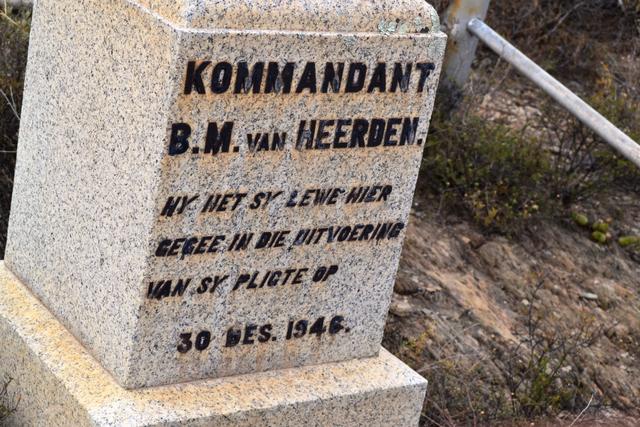
Die insident het ‘n groot impak gehad op die lewe van Soon van Wyk. Hy was nog nie eers ‘n korrespondent vir Die Burger nie, toe beland sy berig oor die insident in 1946 op die voorblad van die koerant. Die einste Soon van Wyk het later, met behulp van ene Barend Shreuders eiehandig die monument vir Kapt B.M. van Heerden by Soutkloof opgerig. Kaptein van Heerden se vrou, dogter en seun was teenwoordig met die bekendstelling. Die inskripsie lees: “Kommandant B.M. van Heerden. Hy het sy lewe hier gegee in die uitvoering van sy pligte op 30 Dec 1946.” Soon van Wyk het die tralies van die Monument jaarliks kom verf tot en met sy aftrede.

En so beland ek hier. Op die snikhete Vrydag middag langs ‘n stofpad staan my ysterperd en afkoel. Vandag lyk die monument en traliewerk nog heel skaflik. As jy ooit na Van Wyksdorp ry, kom stop hier, skakel die enjin af, en luister. Nie na wát nie, luister sommer net.

Want dié wêreld het nog baie stories…

Ken julle die storie van die laaste man wat in George in die openbaar gehang is? Gert was ‘n voorslagboer, veedief, geweldenaar, moordenaar of selfs ‘n minnaar. Dit hang net af met wie jy praat. Wat wel waar is, is dat sy bynaam Bloubaard was. En hy het hier naby geboer…


Gedenksteen vir Kommandant B.M. van Heerden.


Wit geverfde klippe teen die koppie oorkant die pad wys vanwaar die skote geklap het.


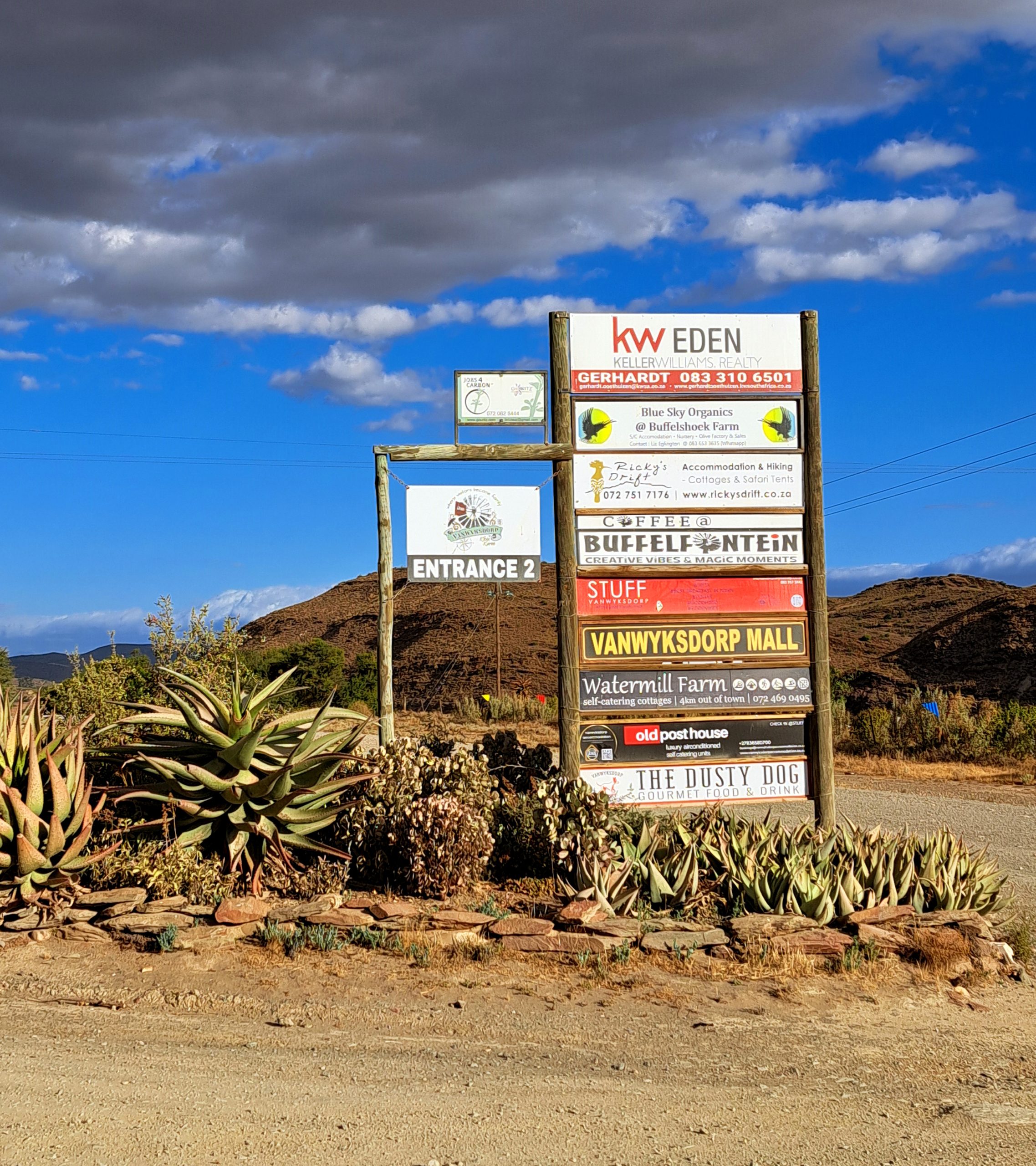
Die ingang na Van Wyksdorp.


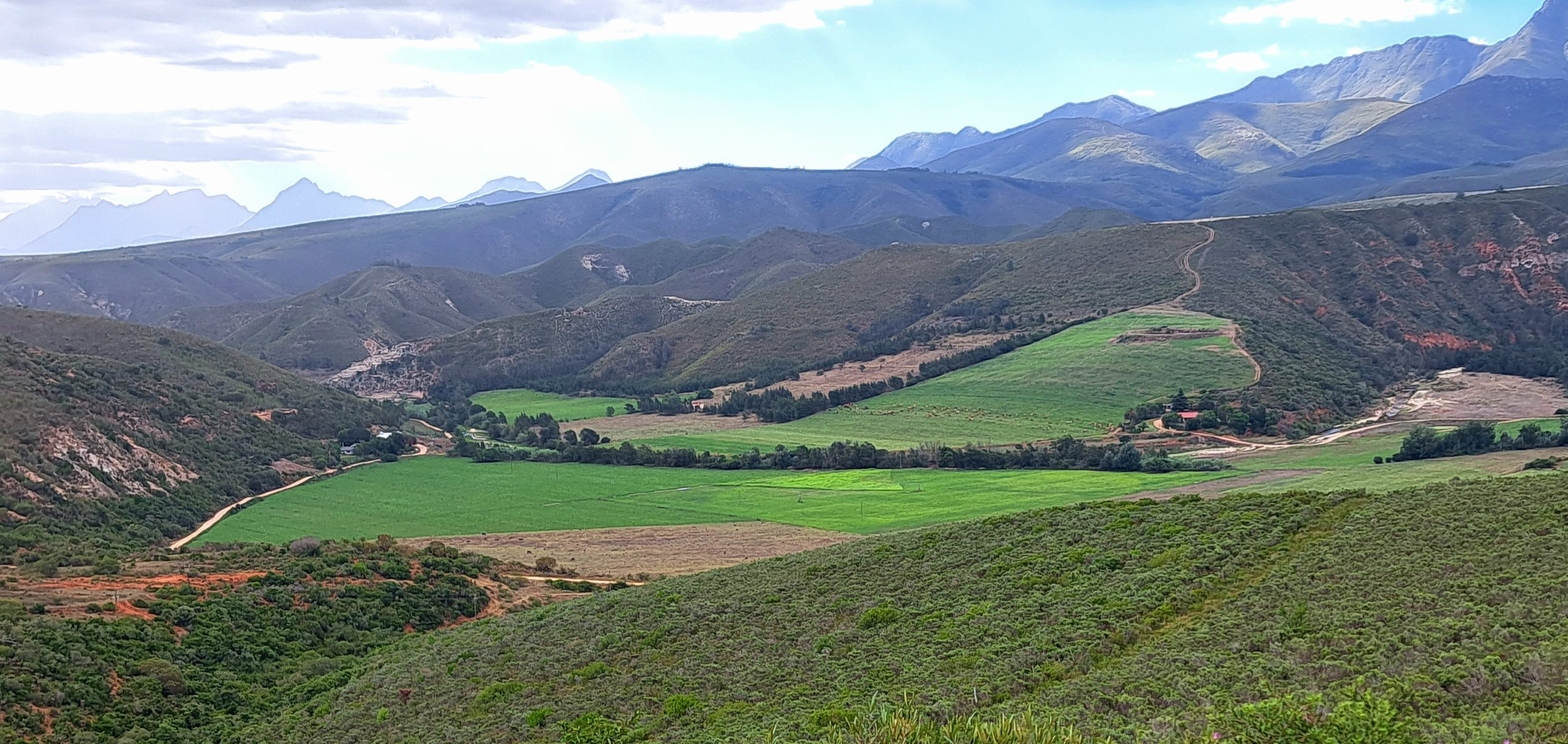
Die pad vanaf Herbertsdale oor Cloetes Pas na Van Wyksdorp.


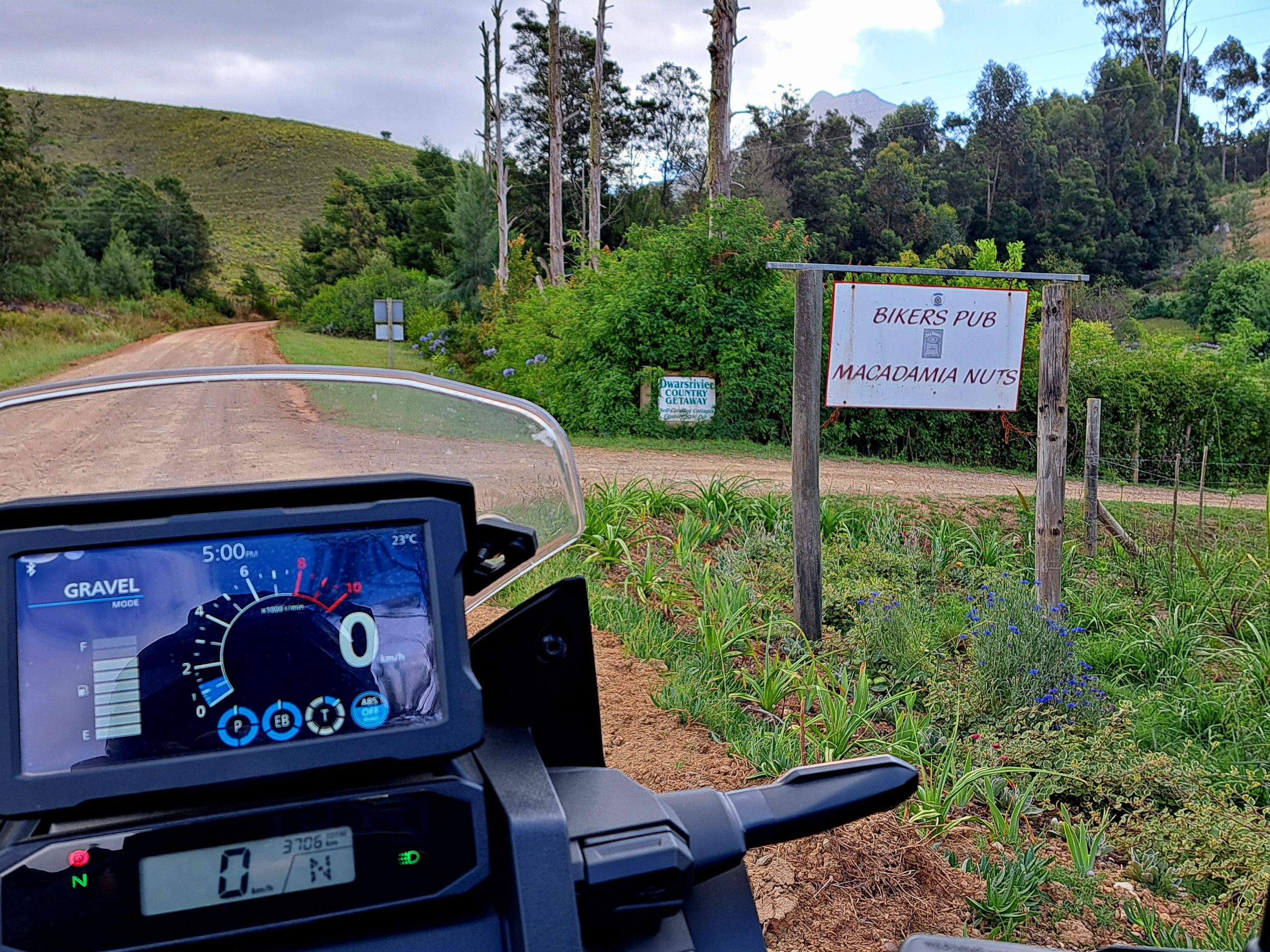
Nuthouse Pub op Cloetes Pas.


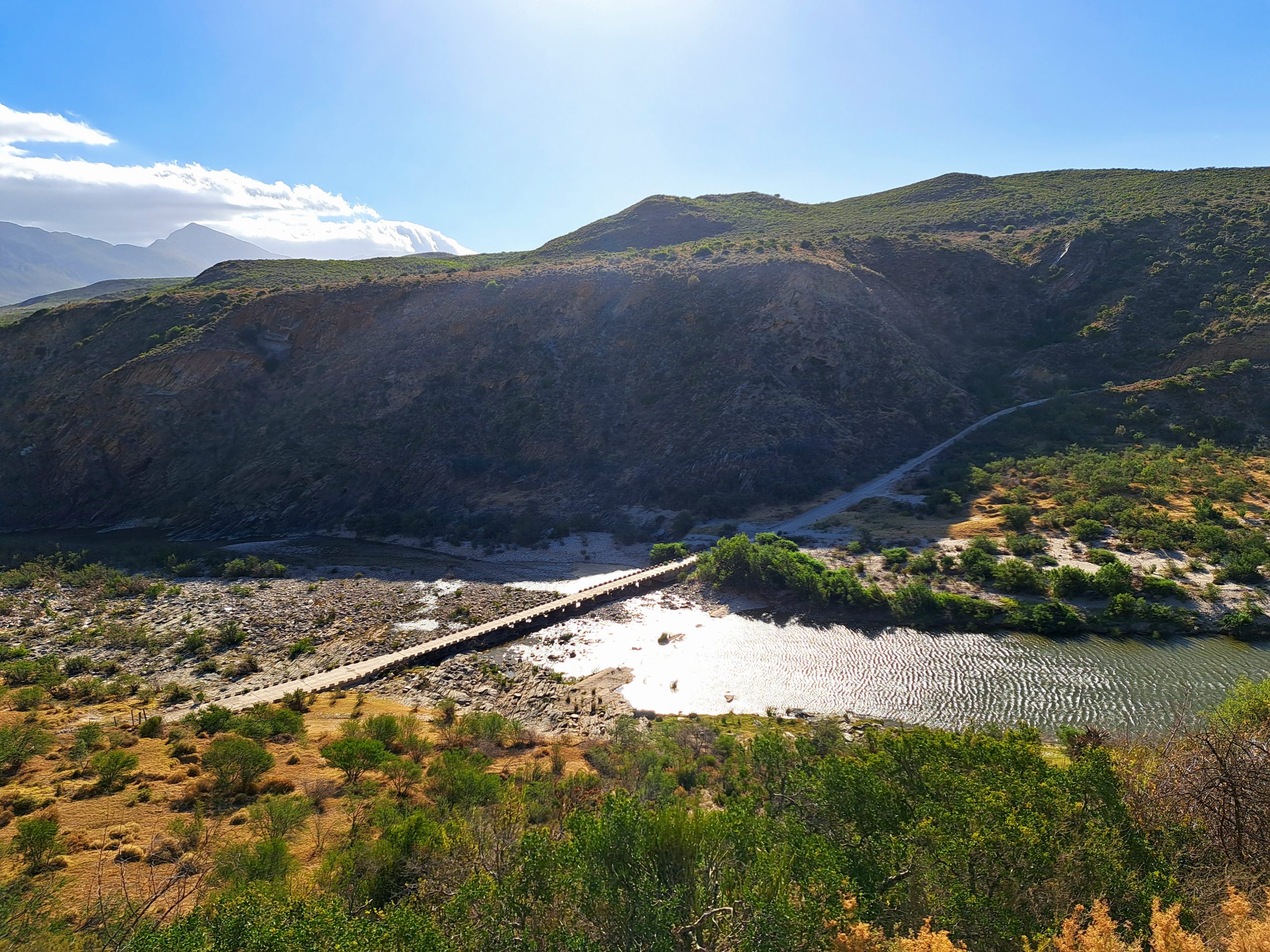
Brug oor die Gouritsrivier (’n lekker piekniekplek) voor jy opnuut opbeur teen die skerp steiltes uit tot op die Klein Karoo se vlaktes.


*Bronne: Verskeie boorlinge van die distrik Ladismith, die C.P. Nel-museum op Oudtshoorn, geocaching.com, en die artikel “Die moordenaar van die Klein Karoo” deur R.G. Grebe in Die Brandwag van 10 Desember 1976.

**As Bloubaard se storie jou nuuskierigheid geprikkel het, lees die boek “Roman” deur Cas Wepener, saal jou ysterperd op en ry. Gaan soek Bloubaard se graf en as jy hom kry, kyk na die berge en klowe om jou, en luister.

Saturday, March 28, 2026

A Two-Hour Holiday

There are days when the to-do list feels endless, when deadlines stack up like roadblocks, and you can almost hear the hum of the laptop begging you not to leave. On one such day, I decided to ignore the calls of work and steal two hours for myself. Not a big trip, not a planned holiday — just a micro adventure. The plan? Fire up the bike, chase a bit of fresh air, and reset the mind on some of the most scenic roads the Garden Route has to offer. What followed was a micro adventure that proved you don’t need a week off to find freedom, just a bit of road, a sense of curiosity, and a willingness to go.

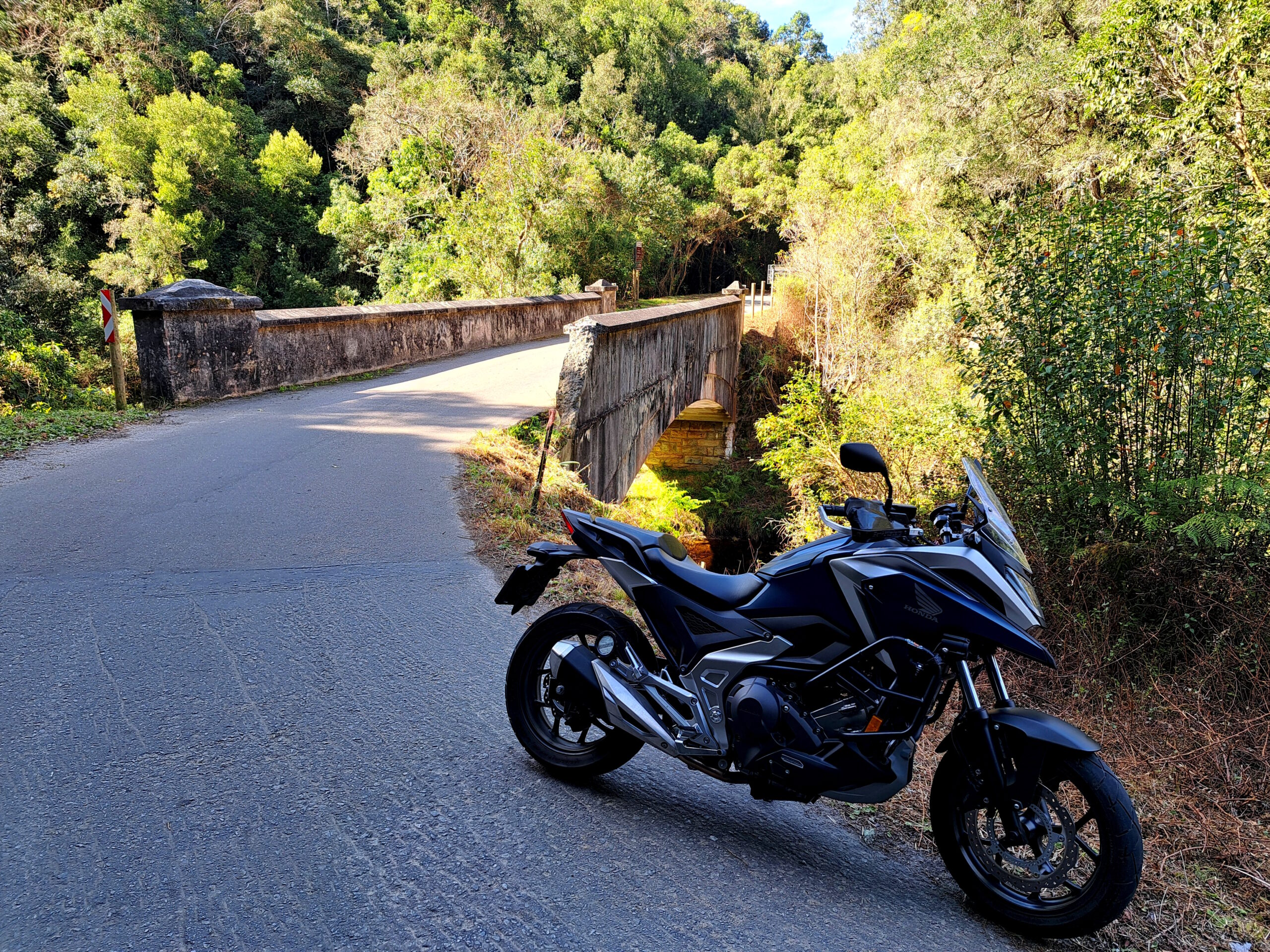
The 7 Passes Road was my chosen route, the historic stretch linking George and Knysna, built by Thomas Bain in the late 1800s. Today it’s a quiet, almost forgotten route, perfect for riders and travellers looking to trade speed for scenery. What it lacks in speed, it makes up for with quiet bends, forest canopies, and stone bridges that whisper stories of another time.


The daylight filtered through the tall indigenous trees as I rode eastward. Riding through the forest is never just about what you see, it’s about the smells of damp earth, the cool air brushing your face, and the sudden bursts of sunlight breaking through leaves. On the bike you feel completely part of the elements, every sense tuned in.

Soon I found myself rolling over the old Kaaimans River Bridge, an arched relic of another century. Further along, the Silver River Bridge stretched out, elegant yet humble, spanning its valley as it has for generations. These bridges are more than infrastructure. They’re part of the Garden Route’s living history, reminders of how travel once meant patience, craftsmanship, and respect for the land.


From there, I wound my way up to Wilderness Heights, where the road opened up and the sea revealed itself in all its shimmering blues. The contrast from forest to ocean is one of the Garden Route’s great joys. In the space of a few minutes you go from green tunnels to endless horizons. I stopped to take it in, letting the salty breeze and the crash of waves below sink into my bones.


The descent into Wilderness is pure joy. Sweeping bends, glimpses of the lagoon, and that sense of freedom only a motorcycle ride delivers. Along the lagoon, the road runs so close to the water you feel like you’re skimming its surface.


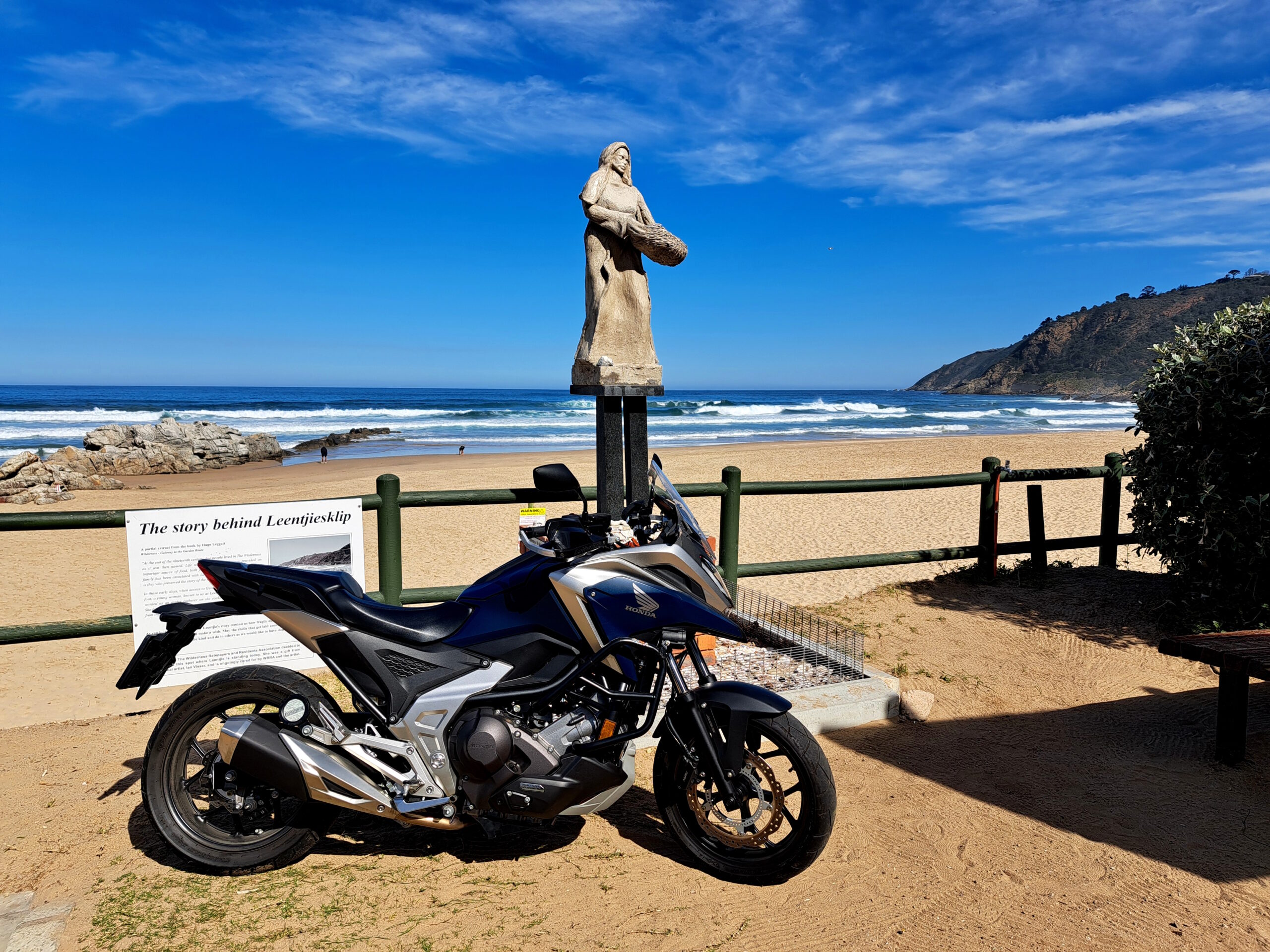
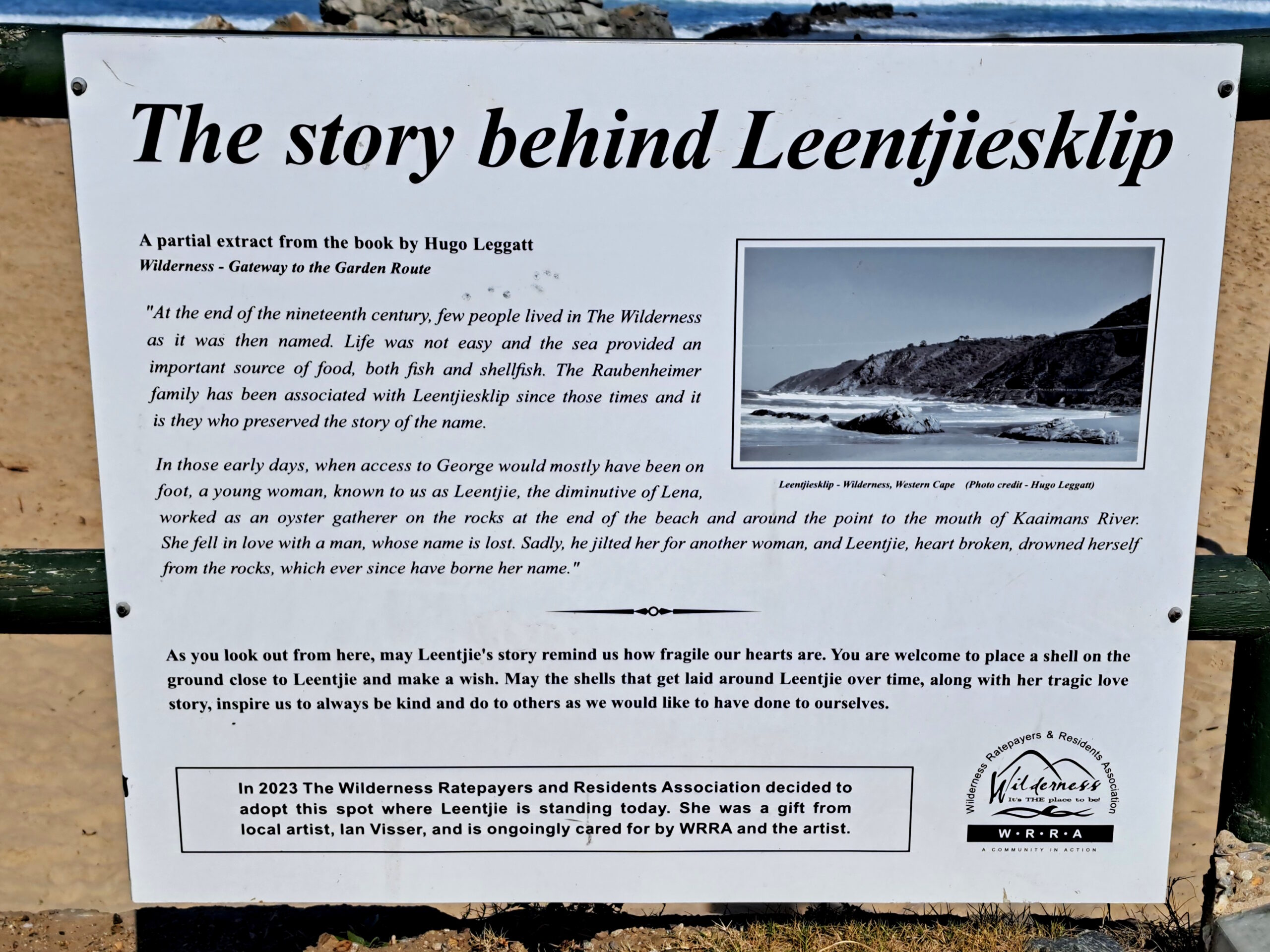
I carried on to Leentjiesklip Beach, where I parked and stretched my legs in the sand. There I found the statue of Leentjie, and paused to read the story behind the name. Standing there, with the waves rolling in, I felt that thread of connection between past and present, between the stories we carry and the places we pass through.


After a few quiet minutes on the beach, it was time to head back. I rode once more up Wilderness Heights, looping back to George via the same 7 Passes Road. In just two hours, I’d shifted my perspective. The forest, the bridges, the ocean, the lagoon, even the gaze of Leentjie on her beach, they’d all reminded me why we ride, why we explore, why sometimes it’s worth leaving the emails unread.

It wasn’t a long holiday. No booking, no packed bags. Just a bike, a bit of sunshine, and the willingness to go. A micro adventure — two hours that felt like two days.

And when I finally rolled back into George, the work was still waiting. But I was clearer, lighter, and reminded once again that adventure doesn’t have to be far or long, it just has to be taken.


Saturday, March 14, 2026

Scenic Rides & Drives: Bloukrans Pass

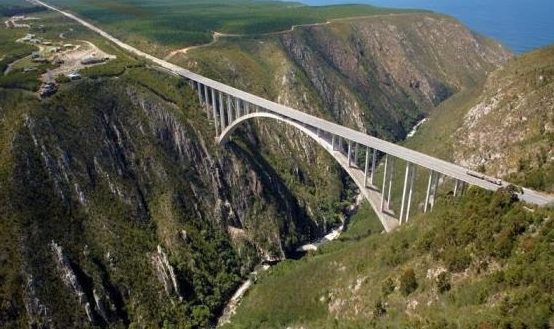
Say “Bloukrans” and most South Africans immediately recognize the name. This is the spot where the adventurous and somewhat crazy do what is reputed to be the highest bungee jump in the world. It is an adrenaline-pumping jump into the gorge and to the river a whopping 216 meters below.


Aerial view of the new N2 bridge over the Bloukrans gorge / Photo: Panoramio

Somewhat forgotten though, is that Bloukrans has something else to offer, something that should be an even bigger draw card for tourism, but is sadly neglected. The absolutely spectacular Bloukrans Pass. The old, original pass.

I rode this pass with my motorcycle about two decades ago and even though it was badly in need of maintenance even then, the sheer beauty of this road took my breath away. Because of the neglect and lack of maintenance the road was closed soon after and blocked off on both ends with a large heap of gravel.

Fast Forward to 2024 and the Western Cape Government decided to repair the pass, all the way to the Western Cape Province border, which, sadly, is only about half of the pass. It does present a wonderful opportunity though to access the pass and enjoy is splendour, without having to negotiate a lot of traffic as the Eastern Cape side is still blocked off (as of December 2024).

When the government first started considering a coastal road between Port Elizabeth and Plettenberg Bay in the 1880’s it was the Master pass-builder, Thomas Bain, who was tasked to plan a route through both of the formidable obstacles of the Grootrivier and Bloukrans gorges within the Tsitsikamma Forests.

Back then the only route between Port Elizabeth and George was via the Langkloof and over the Outeniqua Mountains, via the Montagu Pass, as the Tsitsikamma forests were thought to be impenetrable. In 1869, after a series of fires laying vast tracts of forests to waste, the perfect opportunity presented itself for Bain and his team with to plot a suitable route as an alternative to the journey over the Outeniqua Mountains via the Langkloof.

It is with great excitement I approached this pass from the still blocked Eastern Cape side. Here you can still see the heap of gravel blocking the road and the evidence of someone having to have an abrupt stop because of it.


There is a small gap on the right where a bike or small car can easily pass and get access to the closed pass. But note – this road is dangerous. It is overgrown to the point of single and traffic, the road did fall away in places and there is even evidence of recent rockfalls.


As I entered the pass I encountered two motorcycles with sidecars heading the other way, but we passed each other easily. Riding through here in a sidecar must be a unique perspective on its own! I also encountered two vehicles from the front, but like myself they were going slowly and we saw each other in plenty of time.


Driving though the forest on an abandoned road like this is almost Jurassic-like. If feels like the forest is watching you and you seem to expect to see wildlife with every corner you turn. The air is fresh and the ambient temperature much better than the hot day I experienced on the motorway.


Just as you settle into the experience you turn another corner and see the beautiful bridge over the Bloukrans River. This is the Bloukrans Gorge and I got here in a much better and more enjoyable way than jumping off a bridge!


You are now entering the Western Cape Provence and what a difference it makes! The old pass has been beautifully restored and the road surface is a pleasure to ride. The going is still slow, with lots of photo stops, even though no photo can do this scene justice.


And all to soon it’s over. The pass exits close to the N2 toll gate, unfortunately. So heading west on the N2 you’ll still have to pay Zacchaeus* his toll or, if you have time, you can continue to Natures Valley and keep exploring this wonderful area.


On a side note – when we plan and discover routes (yes, you can discover routes on a map – read here) we use the Tracks 4 Africa and Slingsby Paper maps. These are an investment in your adventuring life and well worth it.

Another investment well worth it, that we’d like to endorse (and no, we are not paid for this promotion – I recommend these purely because I myself found it to be extremely useful) is a subscription to www.mountainpassessouthafrica.co.za. It has a wealth of information on every pass and I fully agree with them when they say: “Bloukrans pass is surely worthy of National Monument status!”

* Zacchaeus was a chief tax-collector at Jericho in the Bible.

Saturday, February 28, 2026

Scenic Rides & Drives: Paardepoort and Mount Hope

This scenic gem of a road is little known, and for several reasons. But it is just this, its lesser known status, that makes it extra special. You can go slower, enjoy the surroundings and even have a swim and a braai!

The route starts just North of the little town of Herold, situated in the Outeniqua mountain range. This route forms a natural extension to the historic Montagu pass that runs over the Outeniqua mountain range from George to Herold, but sadly the pass is in a state of disrepair currently. It is probably the splendour of what was the Montagu Pass, that made Paardepoort a little more obscure and much less known.

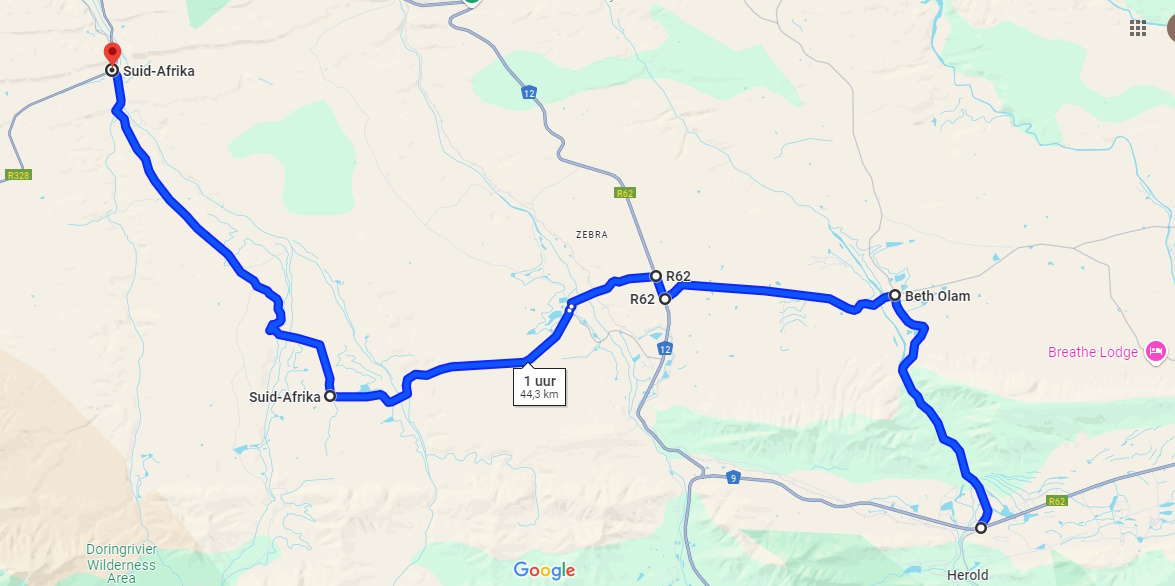
Our featured route is just over 44km and will take about 1 hour travel time without stops, but stop you will. It starts on the N9, crosses the N12 and exits onto R328 between Oudtshoorn and Mossel Bay, North of Robertson Pass.


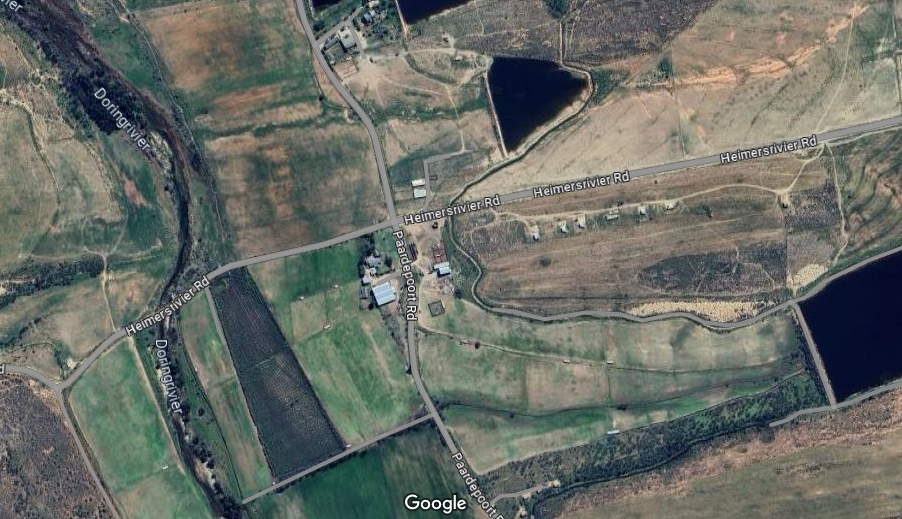
Traveling along the N9 from George to Uniondale, about 30km after you left George, you will find the turn-off to Herold on the right and about 100m after that the turn-off to Paardepoort on your left.


You turn off the N9 and straight onto gravel, heading North.


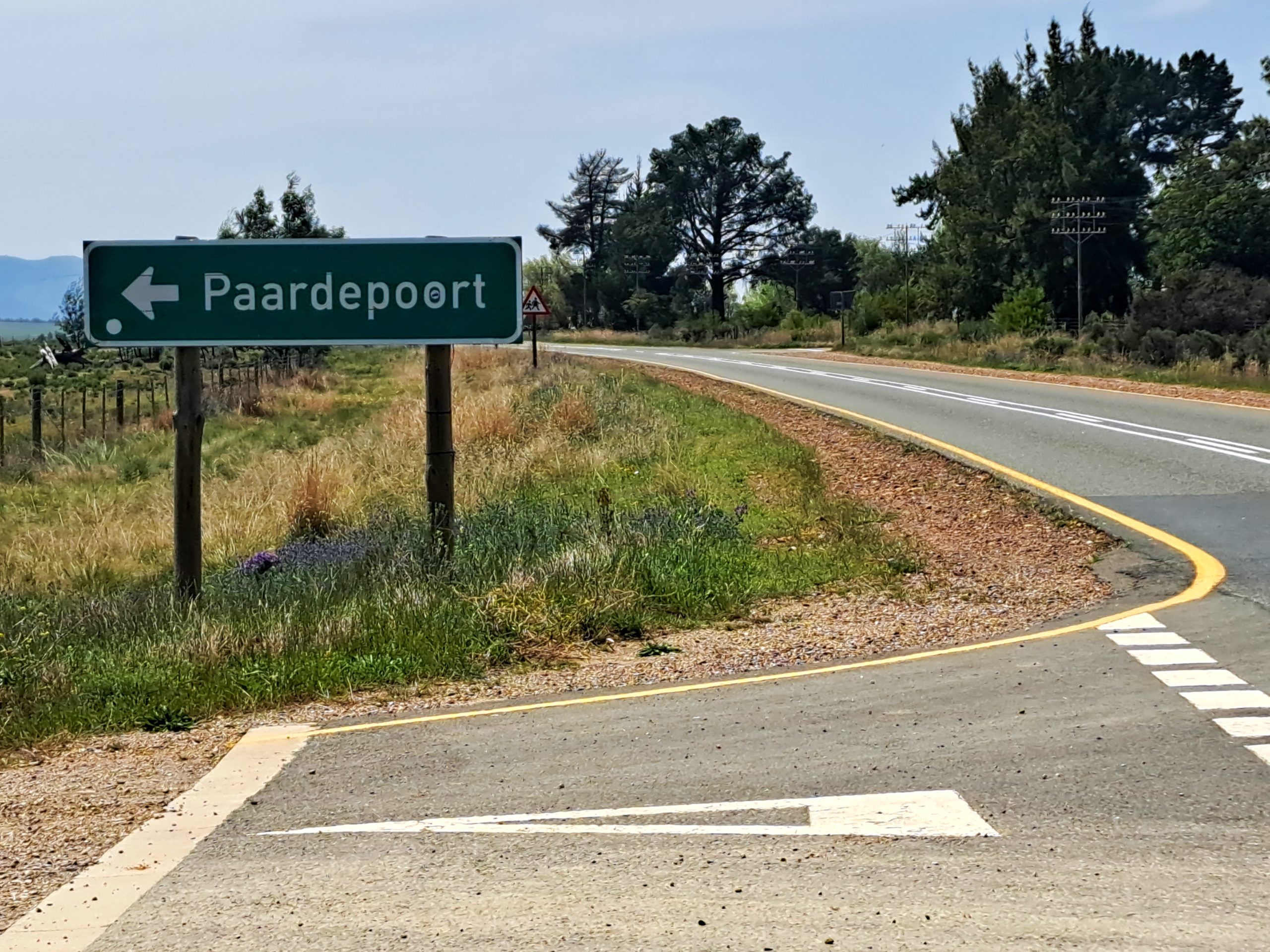
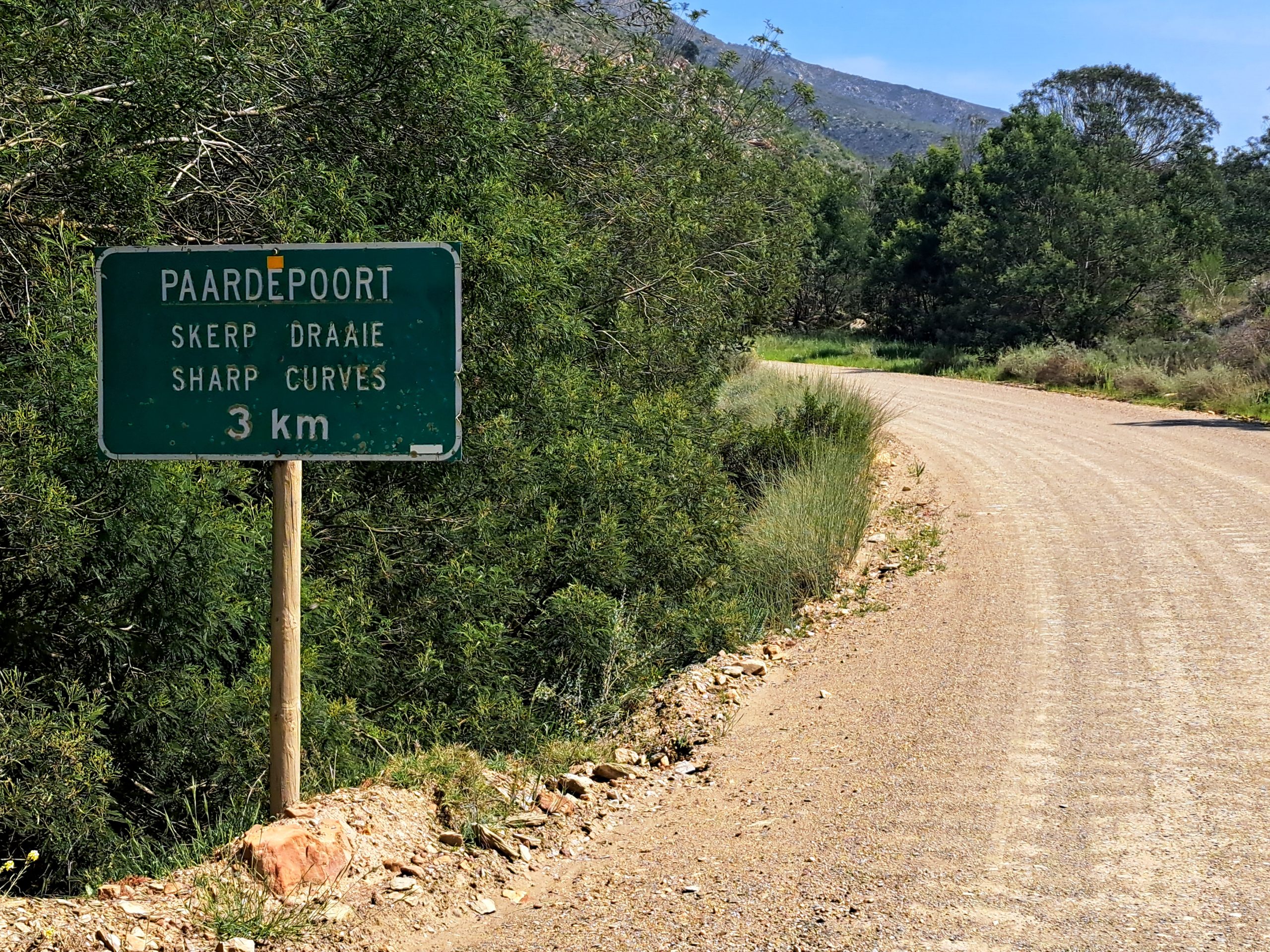
Across the plain and just before you enter the poort through the mountain, there is a somewhat discreet sign, announcing you are entering Paardepoort.

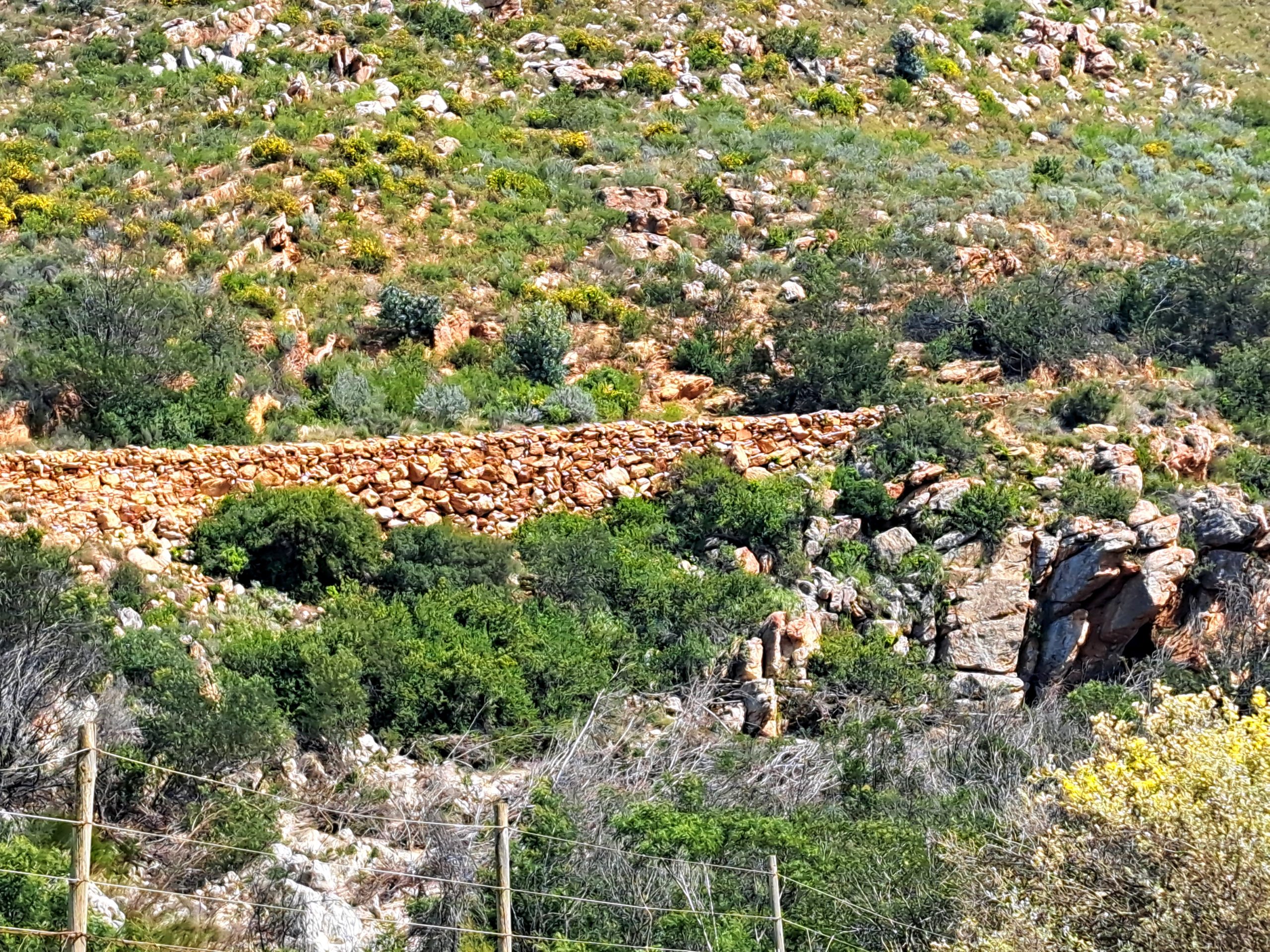
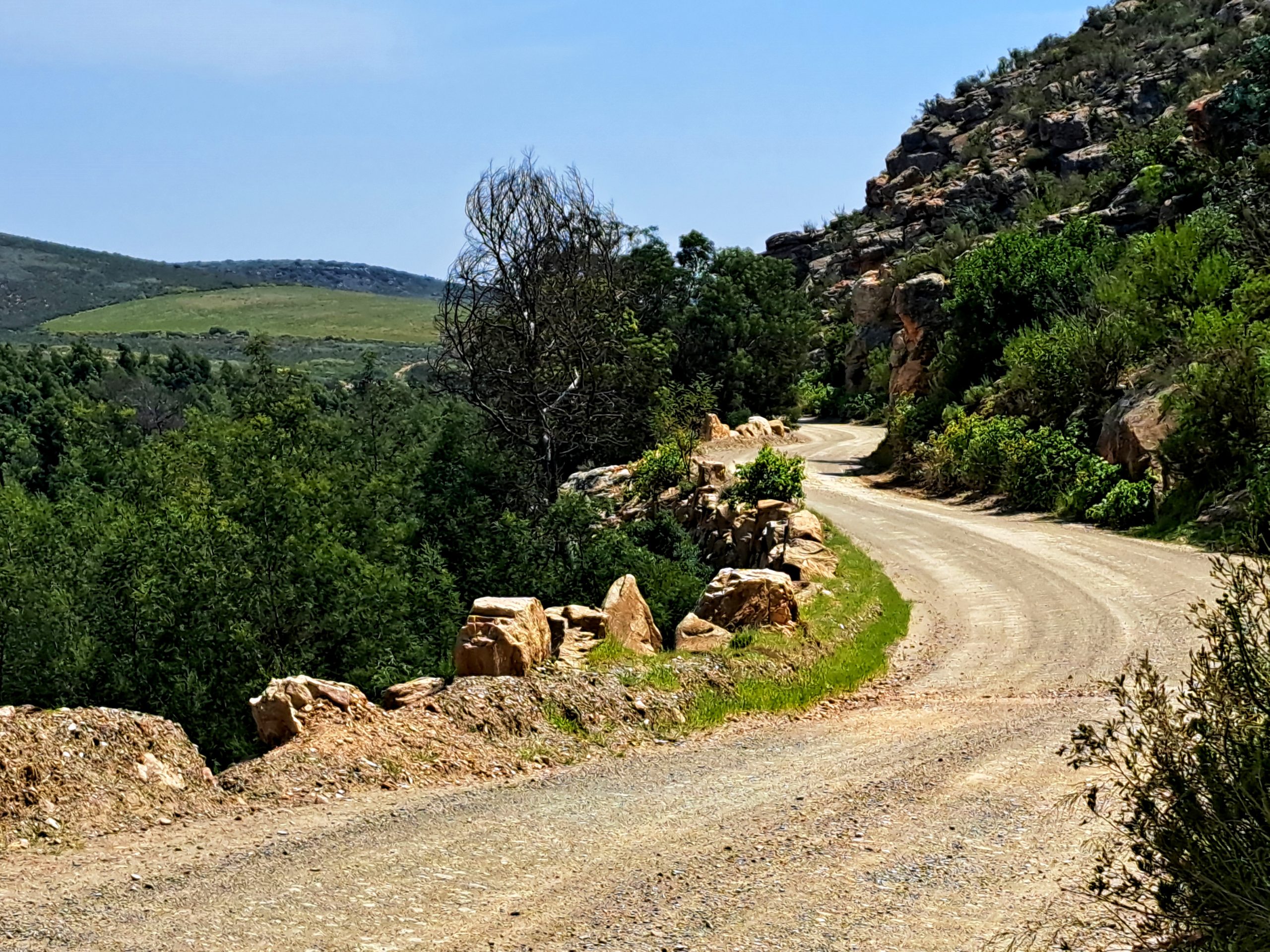
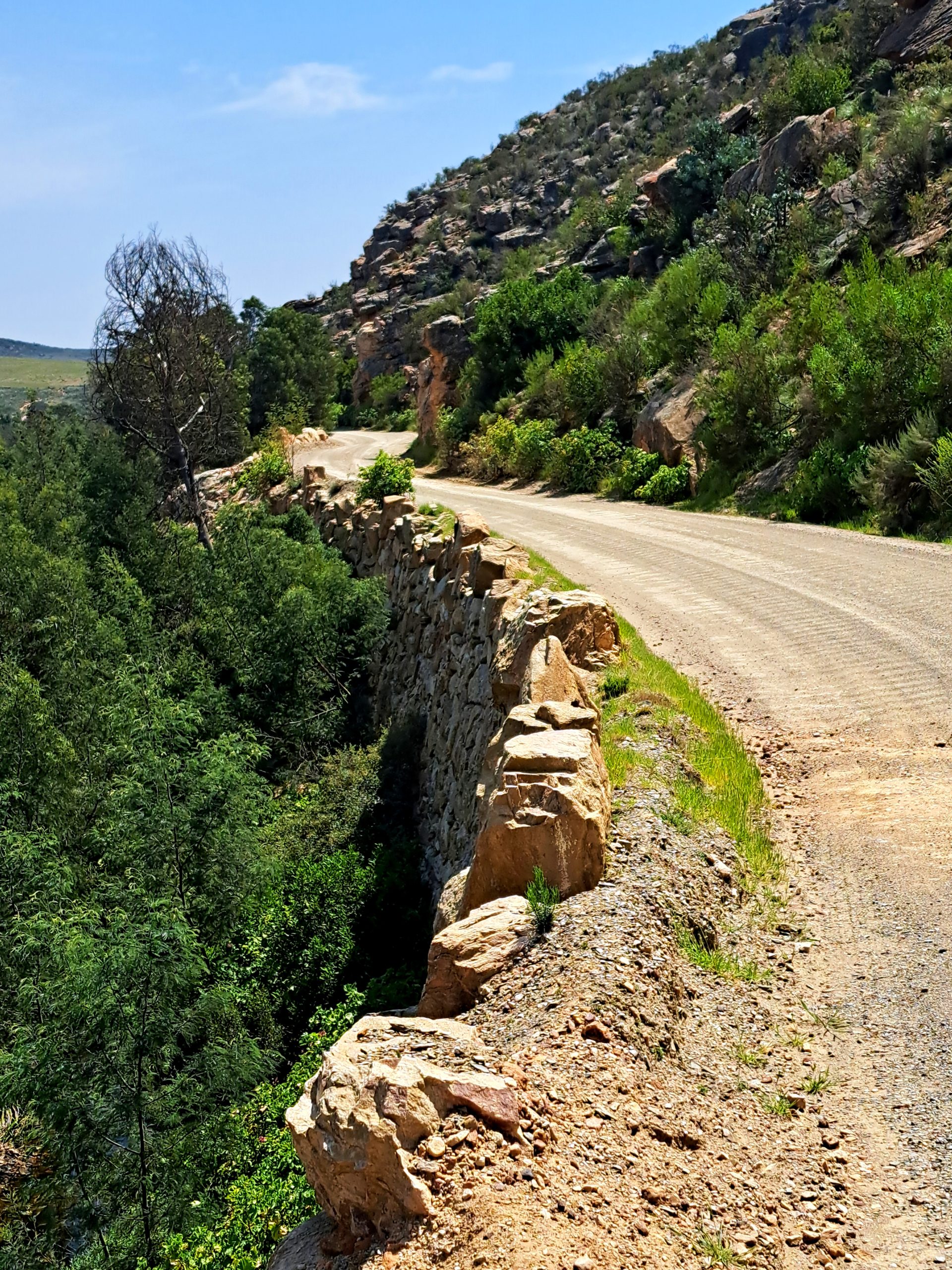
As soon as you enter the Poort you can see the old road, built with the dry-stone wall method similar to Swartberg Pass, on the opposite side of the river.


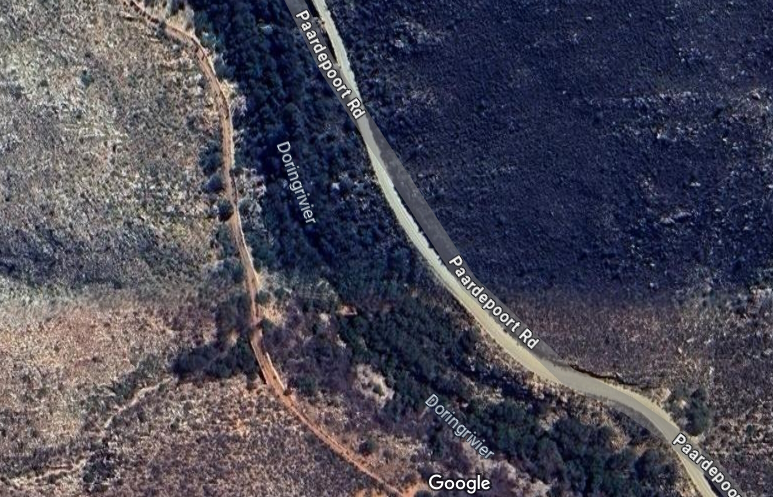
According to the website Mountainpasses SA, once the Montagu Pass had been completed in 1847 the convicts whom had worked on the Montagu Pass were transferred to Paardepoort, where an obvious path through the mountains was a natural progression of the Montagu pass northwards to Oudtshoorn. The original road on the western bank of the Doring River was only one lane wide, but it did offer passing opportunities. The road was opened in 1850.


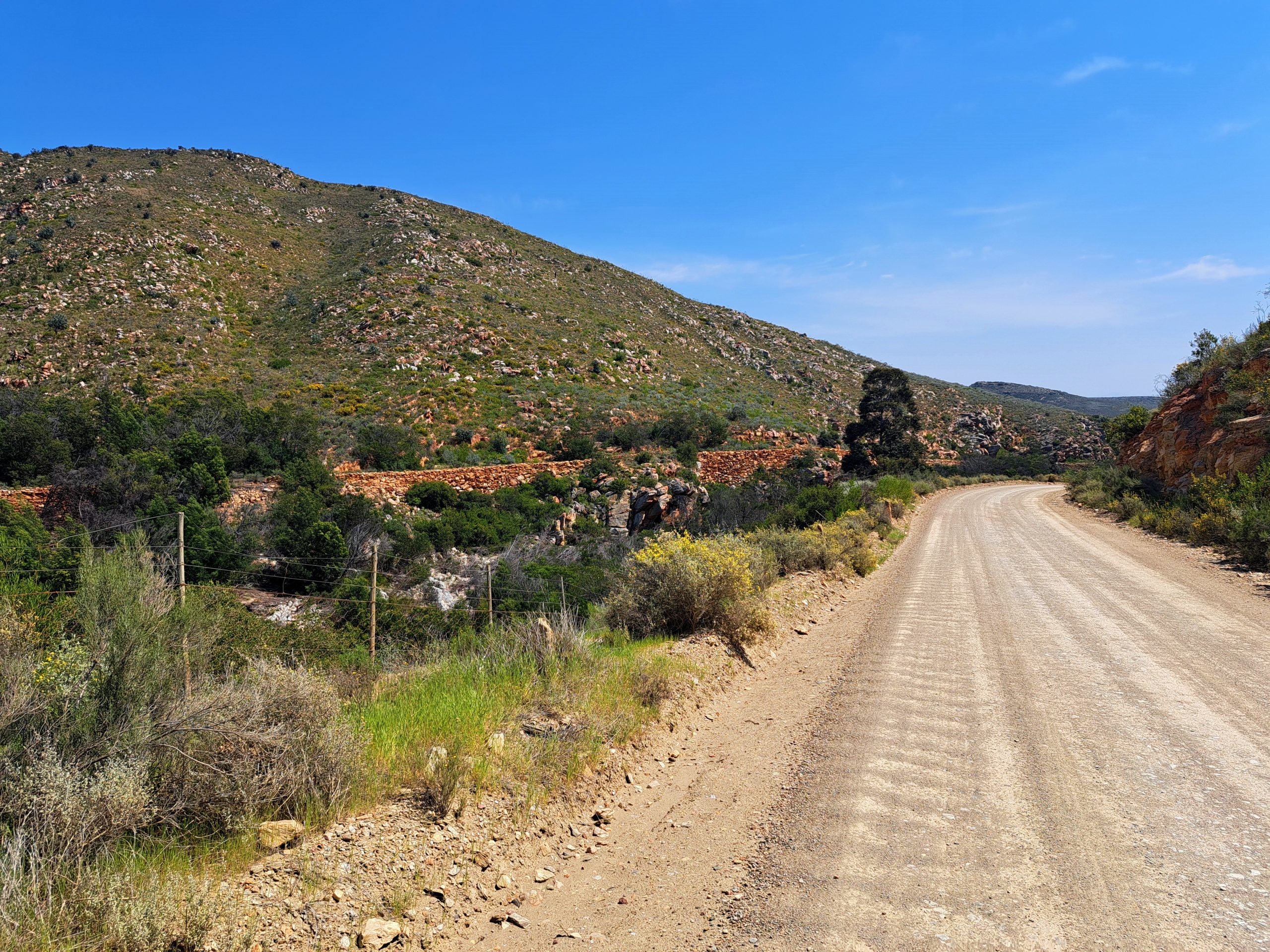
The new road on the eastern bank of the poort was built in in the 1930’s offering a safer, wider road. The road has been blasted out of the rock-face and still remains fairly narrow. The scenery is pleasant as the road meanders next to the river, faithfully copying its course for several kilometers. The stonework on the new road is a work of art in itself.


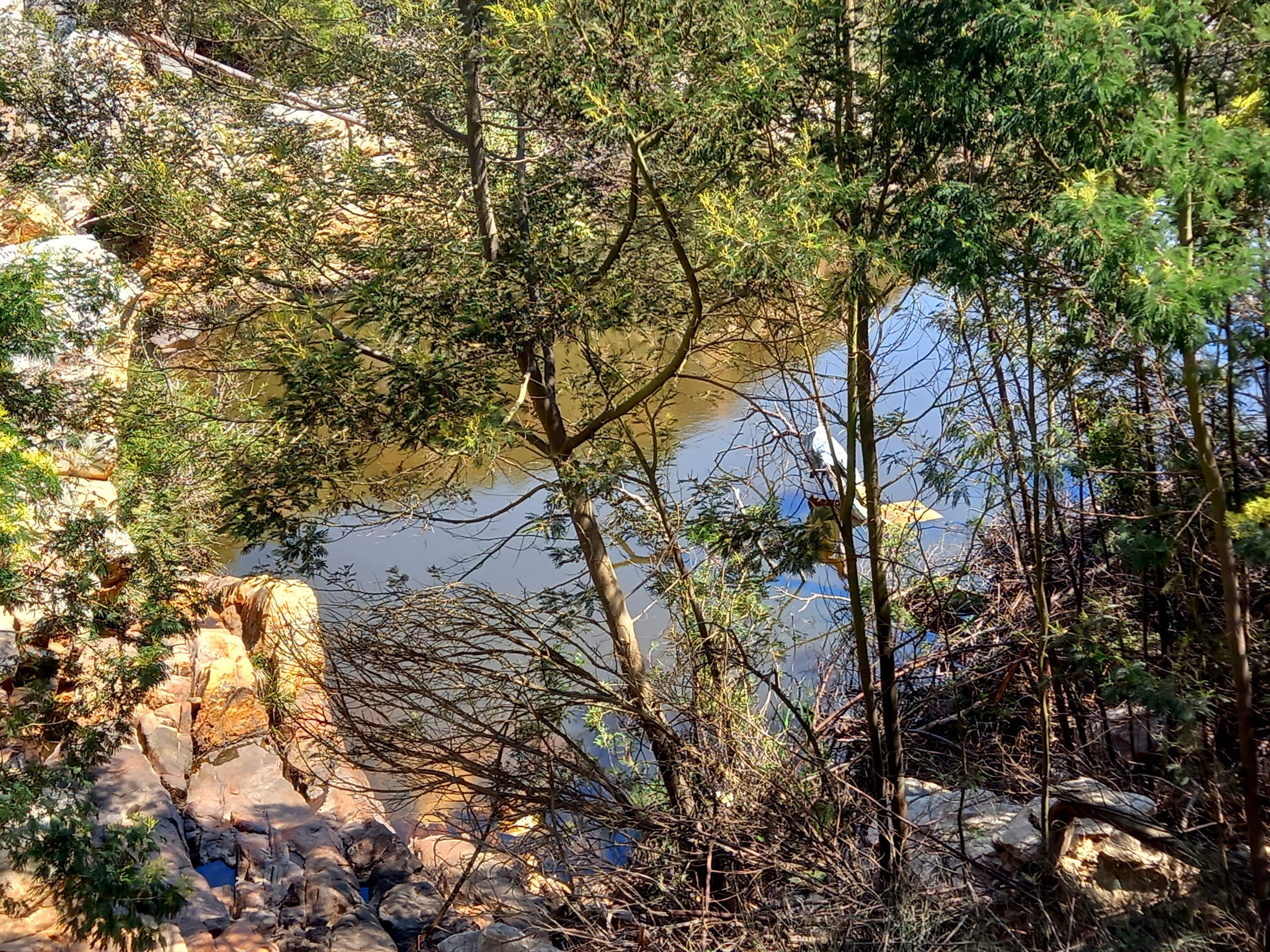
At one point the river forms a pool, perfect for swimming if it is a hot day. Just make sure you park somewhere safe, not obscuring the road.


This is an older photo of myself riding through Paardepoort in the opposite direction during the launch of the new BMW 1250GS. It is my favourite Paardepoort photo, taken by Rob Till.

Exiting the poort into the Klein Karoo proper you ride / drive a short distance to come to a cross in the road that my friends and I call the centre of the world if you are an Adventure Biker. We sometimes even meet up at this crossing before a ride. Why? Because from this point you can go anywhere! Riding South you go through Paardepoort, you used to be able to cross Montagu pass and if you kept going you could ride all the way to Cape Augulhas, the Southernmost point of Africa, even crossing a river using a pontoon at one stage.

Riding East you can do Baviaanskloof, Addo, Lesotho and all the way to Mozambique. If you hop the pond you can even ride Madagascar! Go North and you can ride Swartberg Pass, the Karoo, all the way up through Africa and even up to Russia and the Road of Bones. East lies the Cederberg, West Coast and if you want you can travel further East and go ride South America! All from this spot.


Today we will not be traveling that far though, we head east.


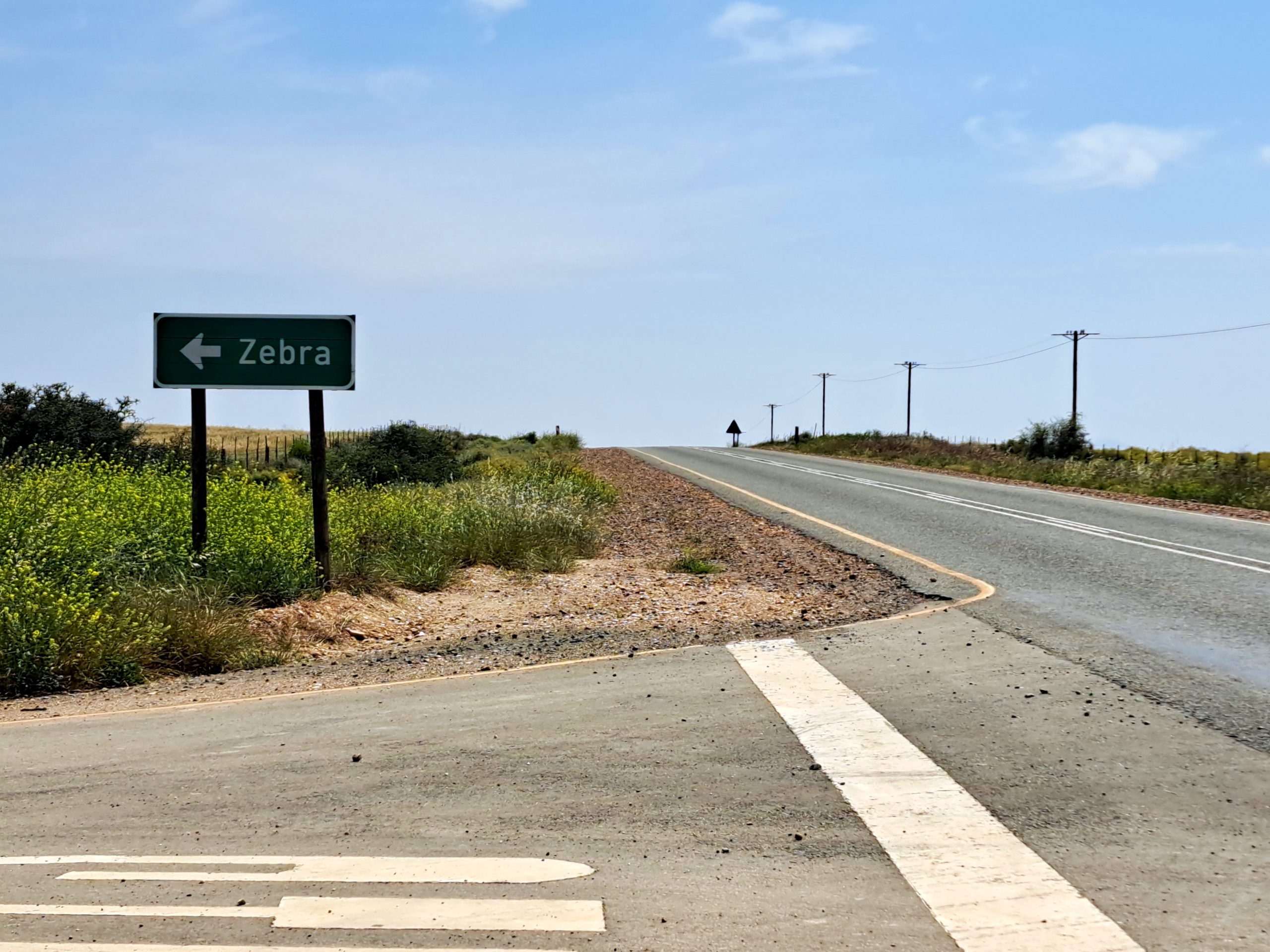
This shortish stretch of around 8km will take you to the N12 where you turn right direction Oudtshoorn, but only for 800m where you leave the tar again turning left toward Zebra.


This is the only section that can be somewhat tricky. After about 3km at the first turnoff keep left and the at the Y keep right. Just make sure you follow the signs that say Mount Hope.

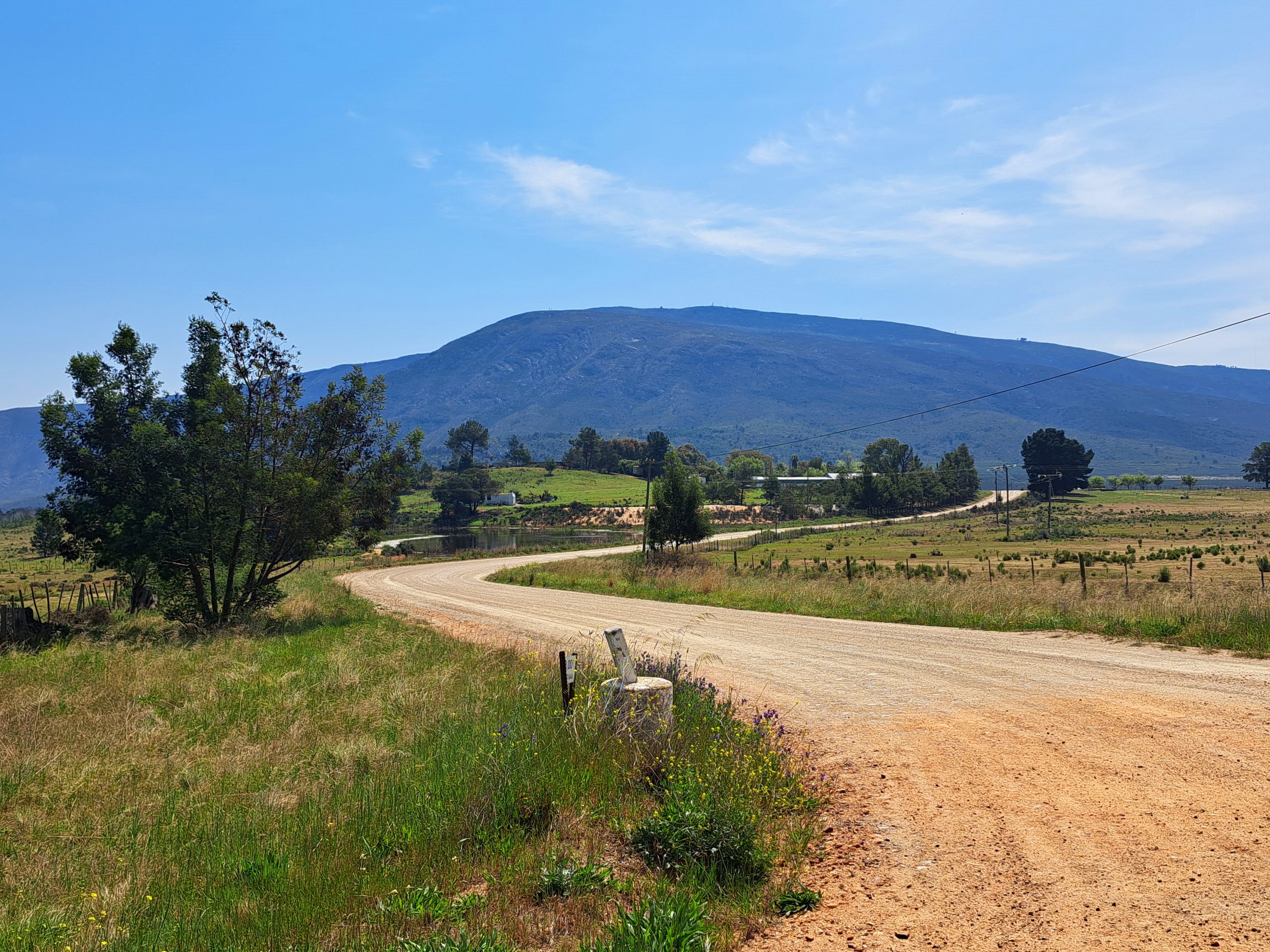
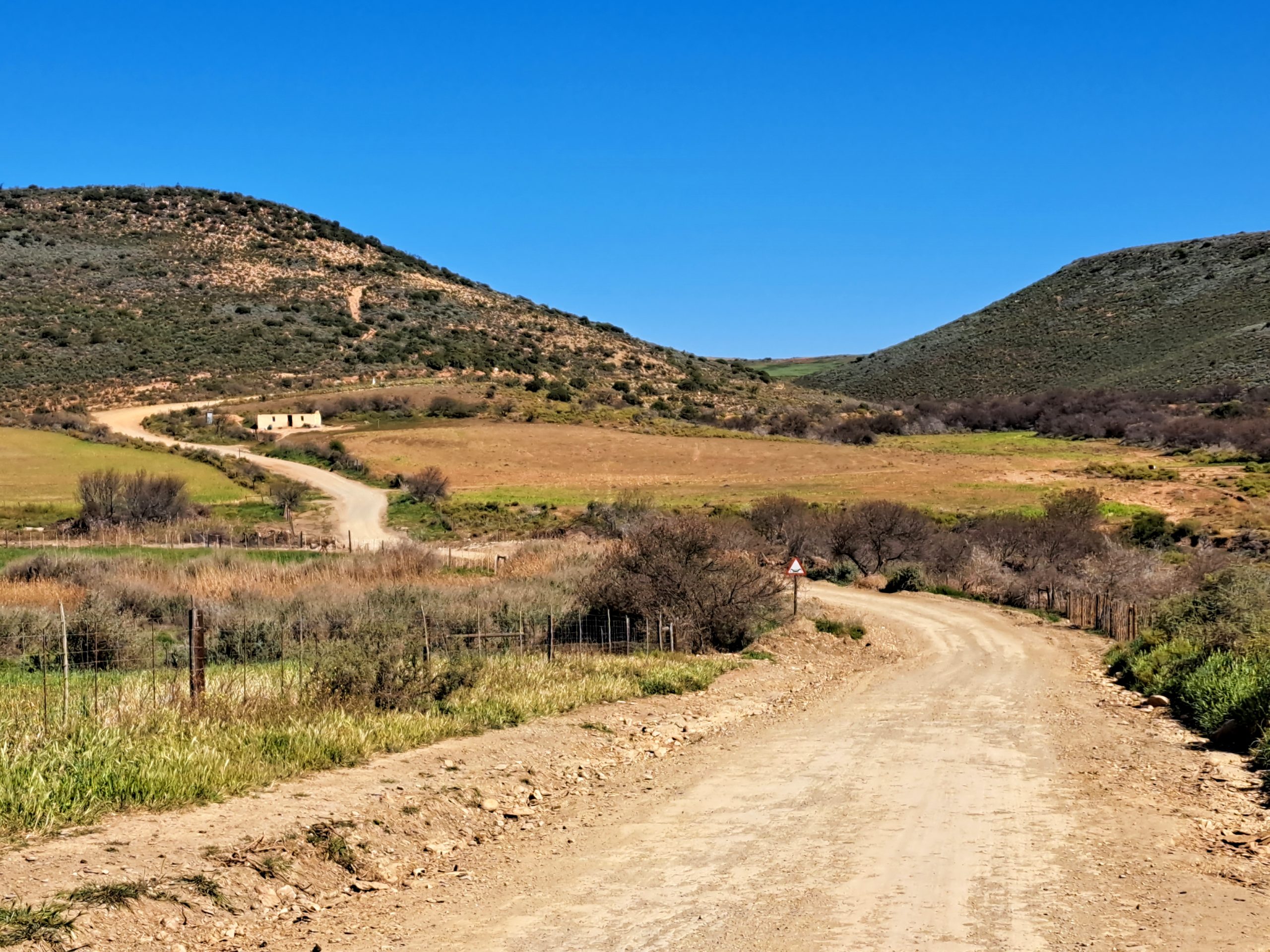
Now you can relax and enjoy the rest of the Klein Karoo Scenery. It changes with every season and is especially spectacular after it has rained.


Around 12km after the Zebra turn-off the turns right. You can carry on straight also, but its quite clear that the main route turns right.

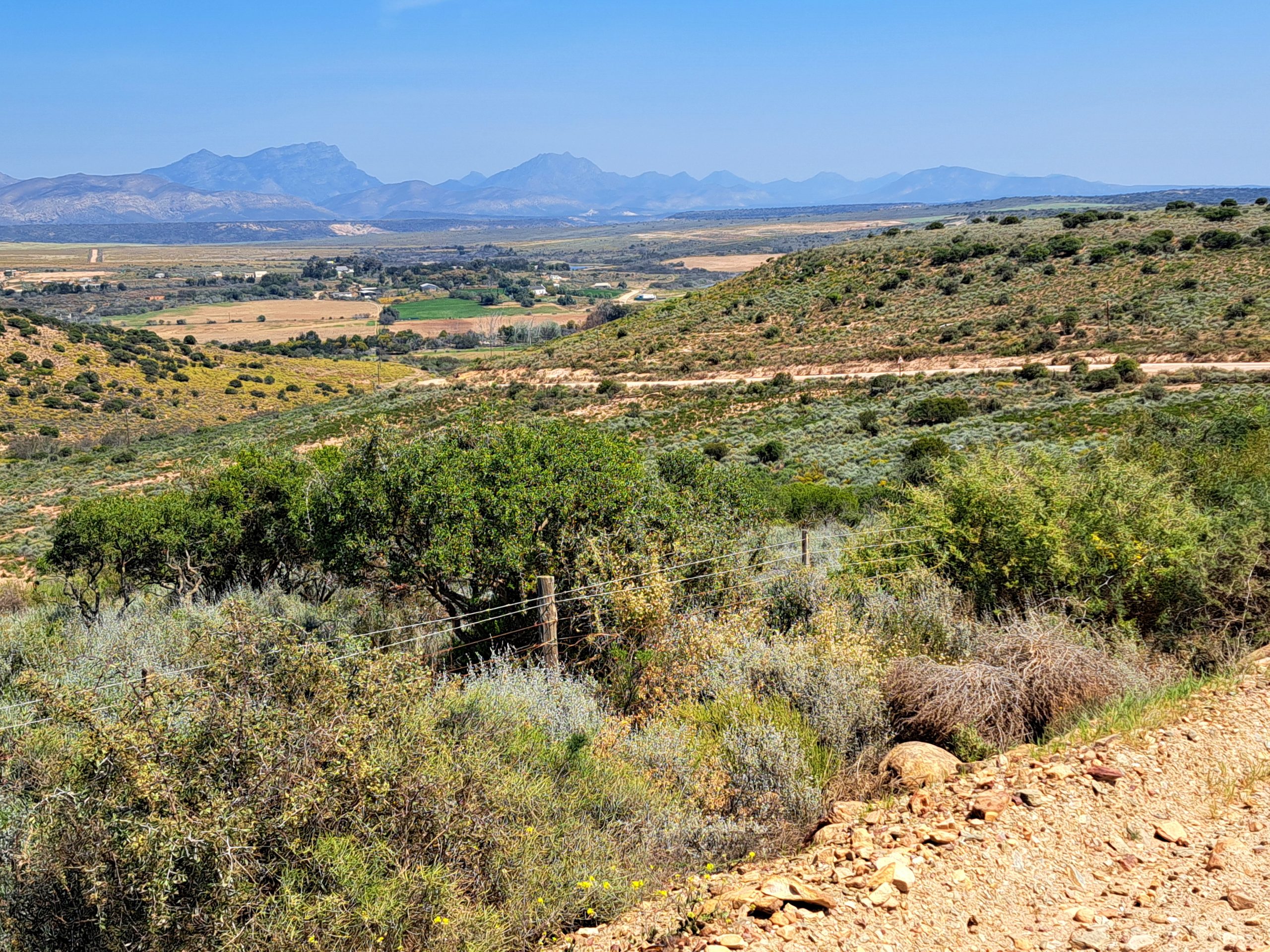
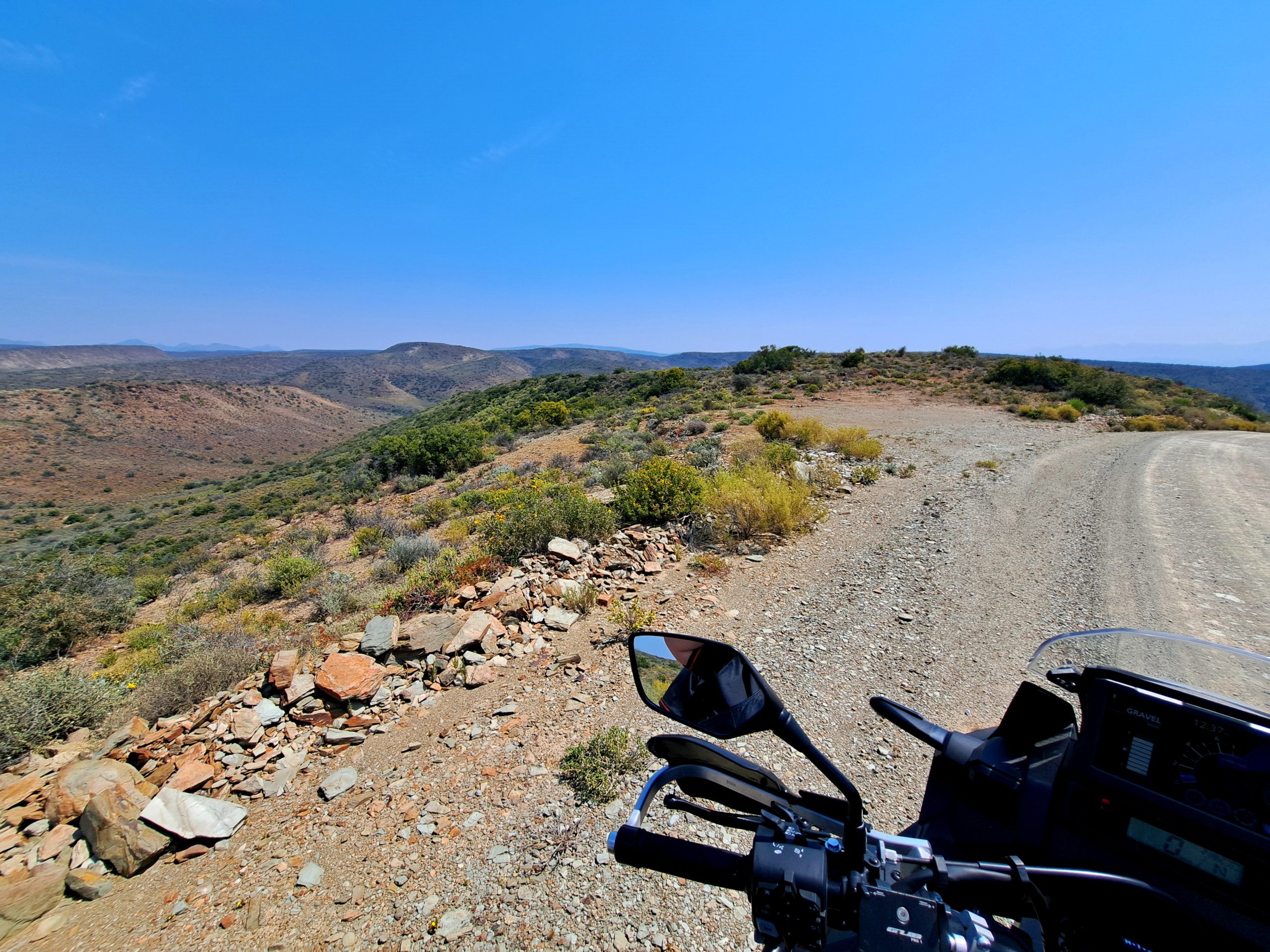
The road takes you over some heights and at the top there is a natural viewpoint over the whole area with a small clearing perfect for a roadside braai (we are busy with a roadside braai project also, so check back on this website soon if that is something that interests you).


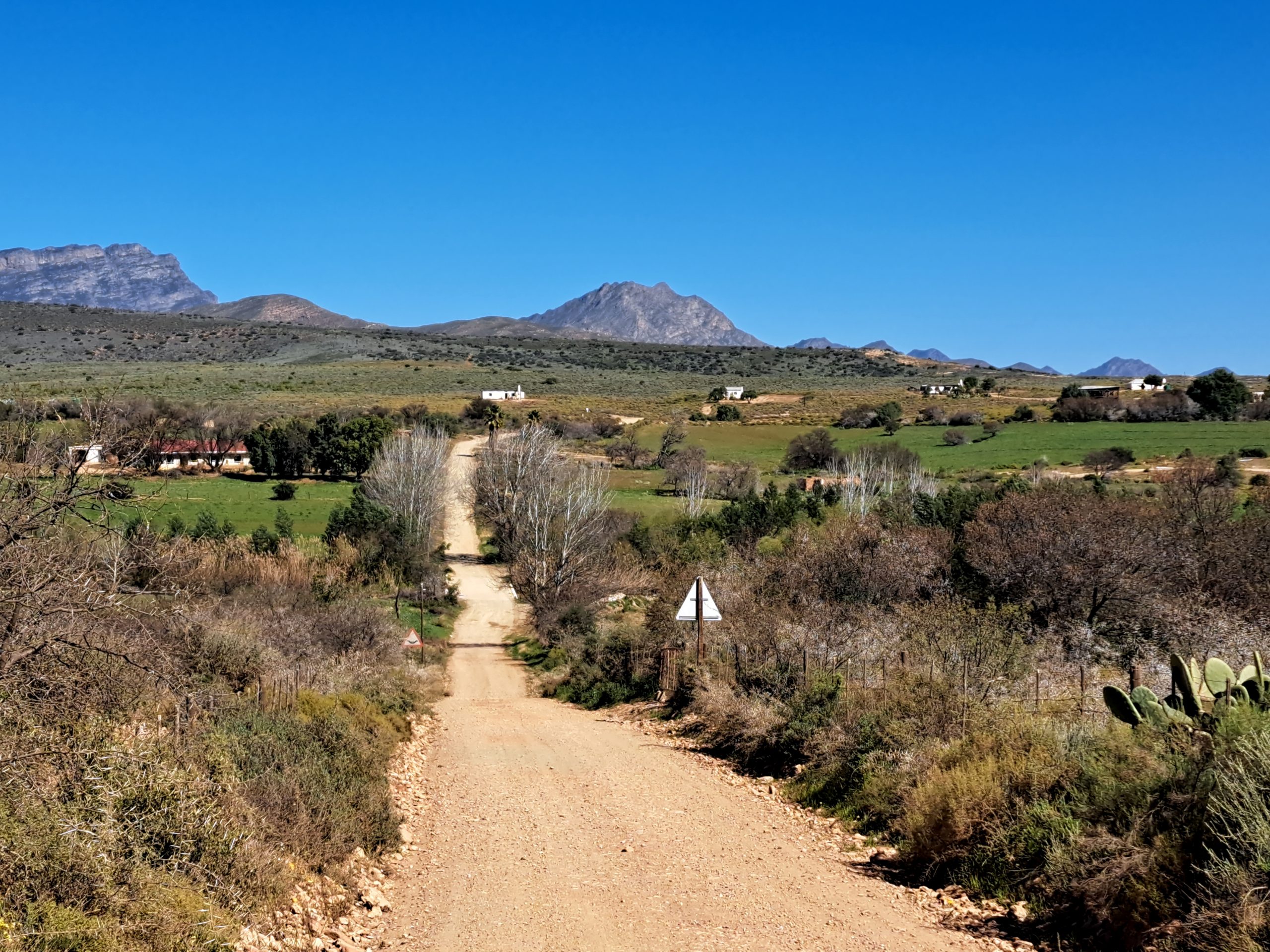
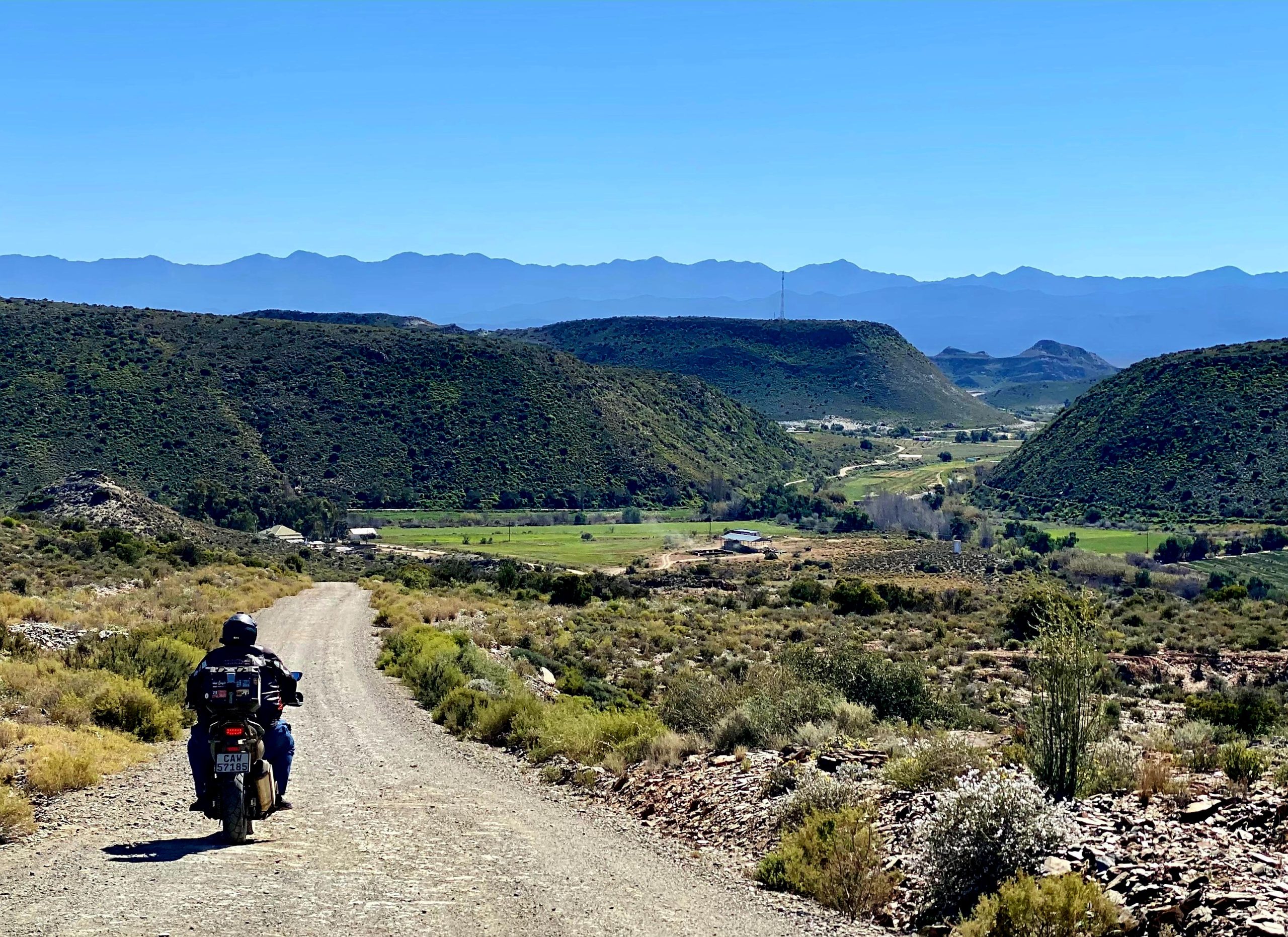
From here you drop down into a green valley and all the way down to the river.


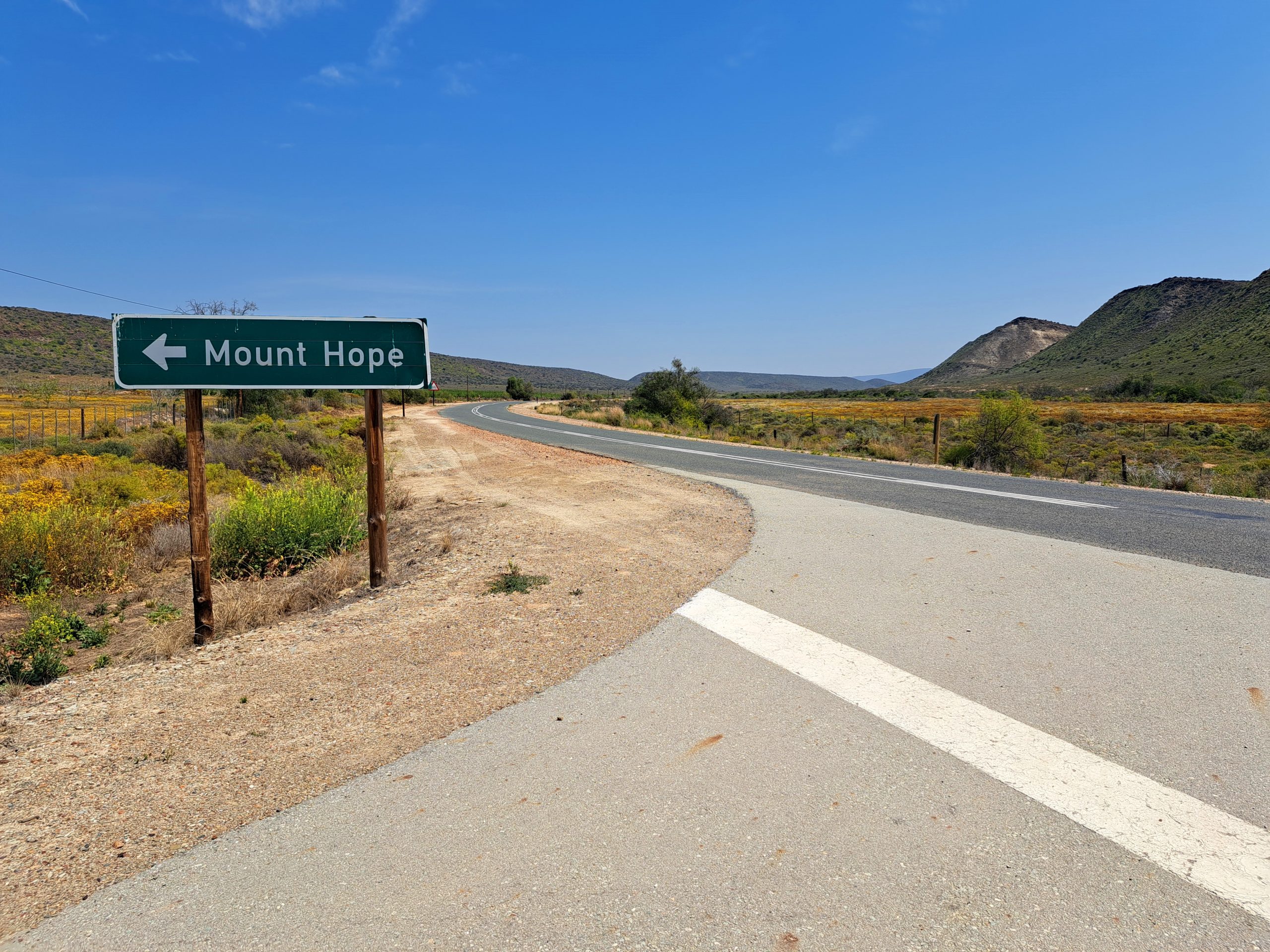
And all to soon its over. The road exits onto the R328 connecting Oudtshoorn and Mossel Bay. If you wanted to do the route in reverse, this is where you would start. The sign says Mount Hope.


When we plan and discover routes (yes, you can discover routes on a map – read here) we use the Tracks 4 Africa and Slingsby Paper maps. These are an investment in your adventuring life and well worth it. Another investment well worth it, that we’d like to endorse (and no, we are not paid for this promotion – I recommend these purely because I myself found it to be extremely useful) is a subscription to www.mountainpassessouthafrica.co.za.

The subscription membership part is where the bulk of the info of Paardepoort comes from. I have known about and ridden Paardepoort for 10+ years and even I learned a lot more about the poort after I joined MPSA. It is an invaluable resource if you like to explore our country!